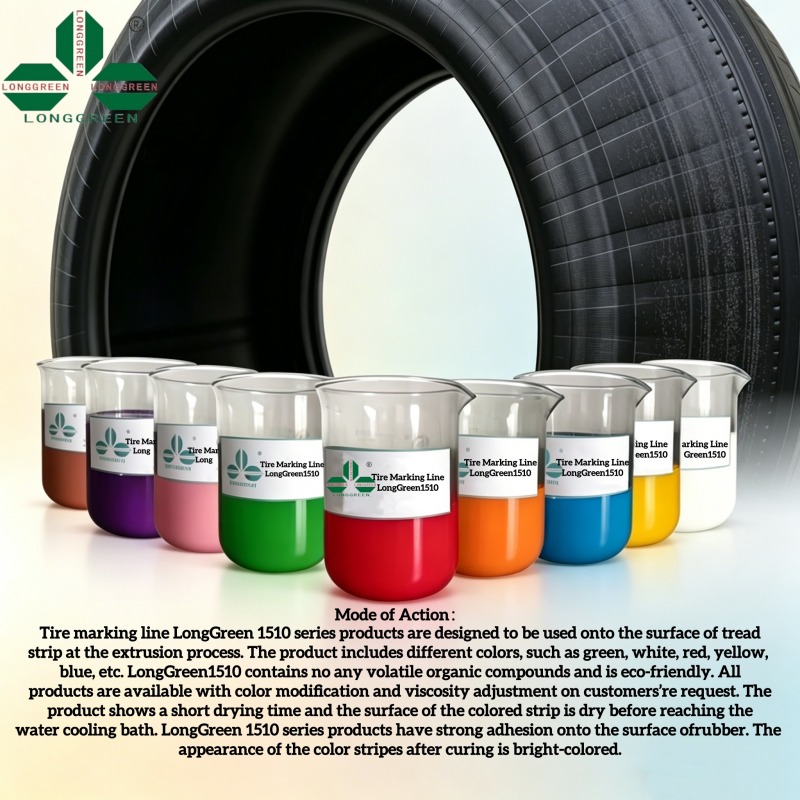
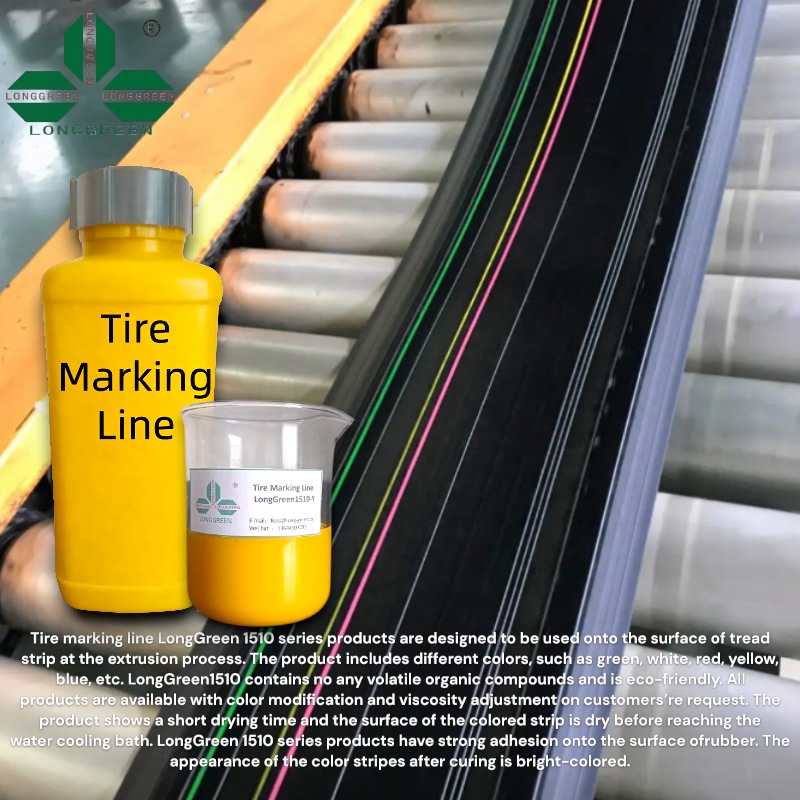
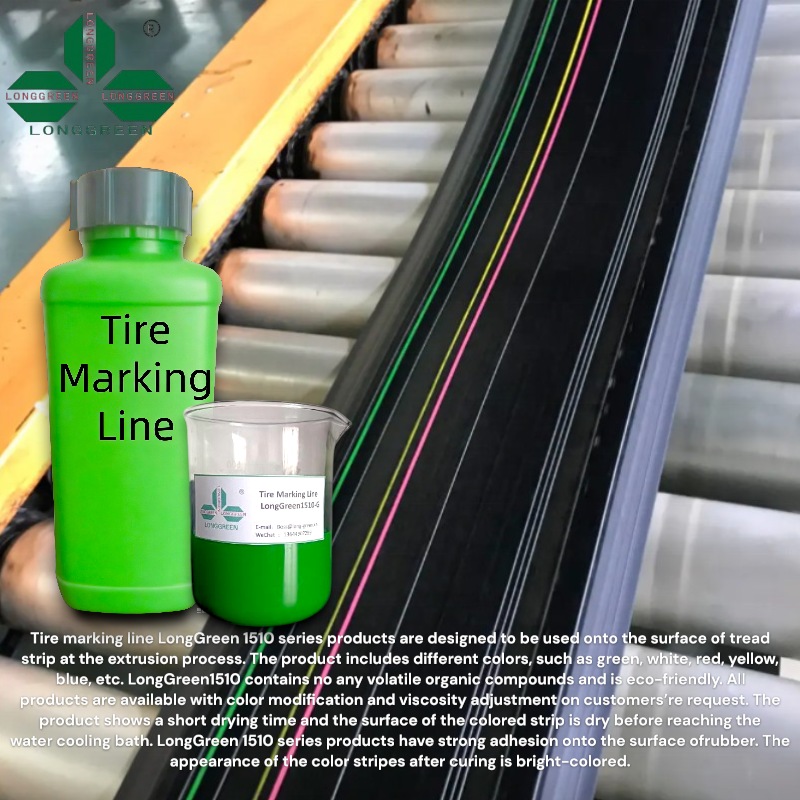
When you walk into a tyre shop or inspect a brand-new tyre, you may notice several vivid coloured lines on its tread. These lines, officially known as Coloured Tyre Marking Lines, are often misunderstood as decorative elements or symbols of high-end tyres. However, their true value lies in the critical role these lines play in the tyre production and logistics process. Far from being trivial decorations, such marking lines are essential "identity cards" that ensure the efficiency and accuracy of tyre manufacturing operations. This article will delve into the mysteries of Coloured Tyre Marking Lines, uncovering their functions, material characteristics, application scenarios, and common misconceptions.
The core function of Coloured Tyre Marking Lines is to enable rapid identification and classification of tyres during production. In modern tyre factories, multiple specifications, tread patterns, and rubber formulas of tyres are often produced simultaneously on the same production line. For example, an assembly line may churn out economical tyres for family cars, high-performance tyres for off-road vehicles, and energy-saving tyres for electric vehicles at the same time. Distinguishing these similar-looking tyres quickly and accurately is a key challenge to improving production efficiency. Coloured Tyre Marking Lines solve this problem perfectly by acting like barcodes in supermarkets—each colour and combination corresponds to specific tyre parameters.
Different colours of these lines are assigned specific meanings to distinguish tyre specifications. For instance, red marking lines may indicate a tyre designed for urban SUVs, while blue ones might correspond to energy-saving passenger car tyres. In addition to colour coding, the spacing and quantity of such lines can also be used to encode information such as production batches and target markets. This coding system allows workers and automated equipment to identify the exact type of tyre in a matter of seconds, significantly reducing the risk of misclassification and improving the overall efficiency of the production line.
Another important role of these marking lines is to assist automated sorting systems. With the development of intelligent manufacturing, modern tyre factories are increasingly equipped with machine vision systems. These systems rely on recognizing such lines to automatically sort tyres into different categories, eliminating the need for manual sorting and greatly reducing human errors. The presence of these lines makes the automation process smoother and more reliable, laying a solid foundation for the high-efficiency operation of tyre production lines.
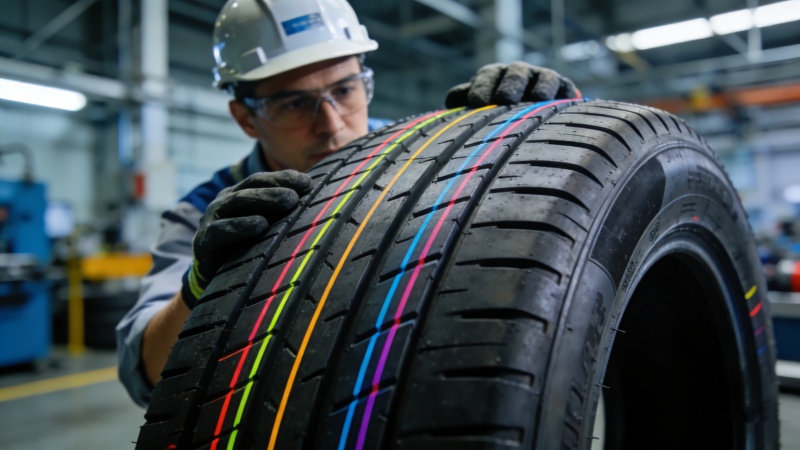
The material selection of Coloured Tyre Marking Lines is a result of careful engineering design. Unlike the durable rubber of the tyre itself, these lines are made of special inks with low wear resistance. This design is intentional: such marking lines are only needed during the production and logistics stages, and their mission is completed once the tyre leaves the factory. When the tyre is installed on a vehicle and driven for several dozen kilometers, these lines will gradually wear off. This characteristic not only ensures that such lines do not affect the tyre's performance during use but also serves as an auxiliary indicator for consumers to judge whether a tyre is brand-new and unused.
Environmental considerations also influence the material choice of these lines. The special inks used for such marking lines are often environmentally friendly formulas, such as water-based inks, which reduce the emission of volatile organic compounds (VOCs) and minimize environmental pollution. As these lines wear off during use, they do not leave long-term harmful residues, aligning with the global trend of green manufacturing.
It is crucial to clarify some common misconceptions about Coloured Tyre Marking Lines. One prevalent myth is that more such lines mean a higher-quality or more expensive tyre. In fact, the opposite is often true—high-end tyres may intentionally reduce the number of these marking lines. This is because high-end tyre manufacturers pursue a concise visual appearance and rely on high-precision molds to ensure production consistency, reducing the need for additional marking lines. Moreover, adding these lines requires extra production processes, so high-end tyre brands prefer to invest costs in optimizing rubber formulas and tread designs rather than in redundant marking lines.
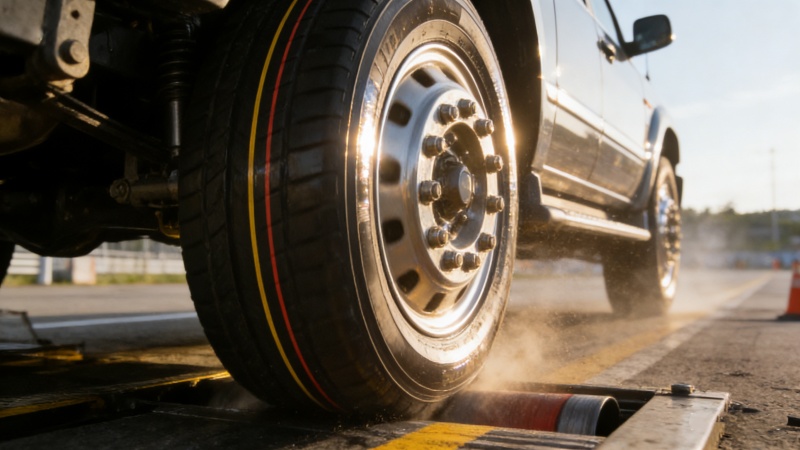
Another misunderstanding is that these marking lines are designed to help consumers distinguish new tyres from used ones. While it is true that the presence of intact such lines can indicate that a tyre is unused, this is a secondary effect rather than their primary purpose. The main audience of these lines is factory workers and automated equipment, not end consumers. When purchasing tyres, consumers should not rely solely on such marking lines; instead, they should check the production date on the tyre sidewall and the condition of tyre hairs (if any) to comprehensively judge whether the tyre is new or refurbished.
The application of Coloured Tyre Marking Lines also reflects the upgrading of the tyre industry. With the advancement of manufacturing technology, the coding system of these lines has become more refined, and the materials used for such marking lines have become more environmentally friendly. In some advanced production lines, artificial intelligence (AI) vision systems can recognize these lines with higher accuracy, further improving sorting efficiency. Additionally, with the rise of customized tyre services, specific such lines can be developed for special needs, such as tyres customized for logistics companies, which use unique colour codes to facilitate fleet management.
In summary, Coloured Tyre Marking Lines are indispensable functional elements in the tyre industry. They are not decorative accessories but efficient identification tools that ensure the smooth operation of tyre production and logistics. Understanding the true role of these lines helps consumers avoid misunderstandings when purchasing tyres and also allows us to appreciate the subtle engineering wisdom behind these small lines. Next time you check your tyres, take a moment to notice these fleeting marking lines—they may have completed their mission silently, but they have laid an important foundation for the safety and reliability of your journey.