
Any tire production veteran knows how troublesome sidewall marking issues can be on high-speed extrusion lines. Faded batch marks, smudged lines, color bleeding during vulcanization, and paint peeling off during tire stretching are extremely common problems. These small marking defects directly lead to product rework, unstable quality, and unnecessary production losses.
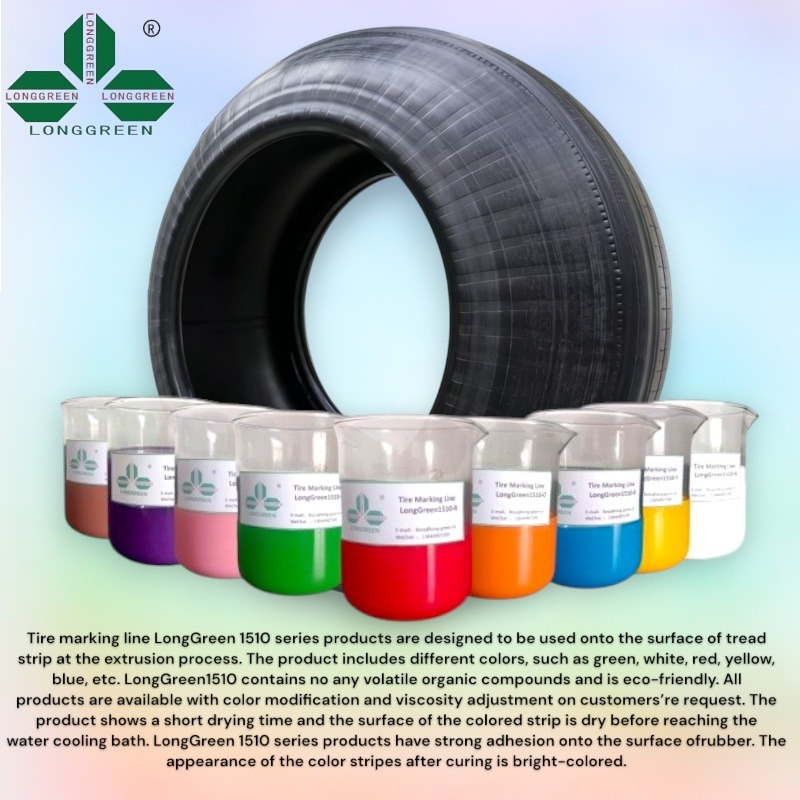
Most factories tend to fix the problem by simply changing marking paint. But in actual production, many find the issue still persists. The real reason is simple: tire marking performance never relies on paint alone. The matching state between the mechanical marking wheel and the marking paint determines the final marking effect. This is why more tire manufacturers are now pairing standard roller marking wheels with LongGreen1510 water-based tire marking paint to stabilize their whole marking process.
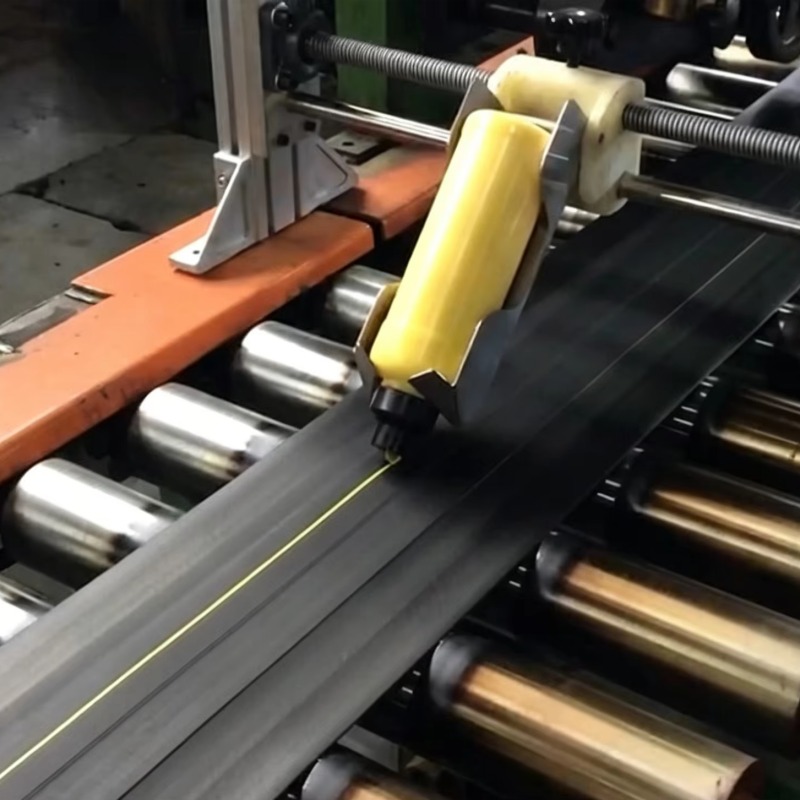
For years, solvent-based marking paint, applied via marking wheel, was widely used in tire plants. It delivered basic adhesion, yet it brought plenty of unavoidable drawbacks. Strong volatile fumes raise workshop safety risks, increase ventilation costs, and fail to meet increasingly strict global environmental standards like REACH. Worse still, its inconsistent drying speed often causes smudging when tires are conveyed, stacked, or sent to vulcanization presses.
Traditional water-based paints solved the emission problem, but they created new production headaches. Most generic water-based formulas, when used with marking wheels, either dry too slowly, drip easily, or feature unbalanced viscosity. They either clog marking wheel grooves and cause broken marks, or fail to stick firmly to raw rubber surfaces. None of these options can keep up with continuous, high-volume automated tire production.
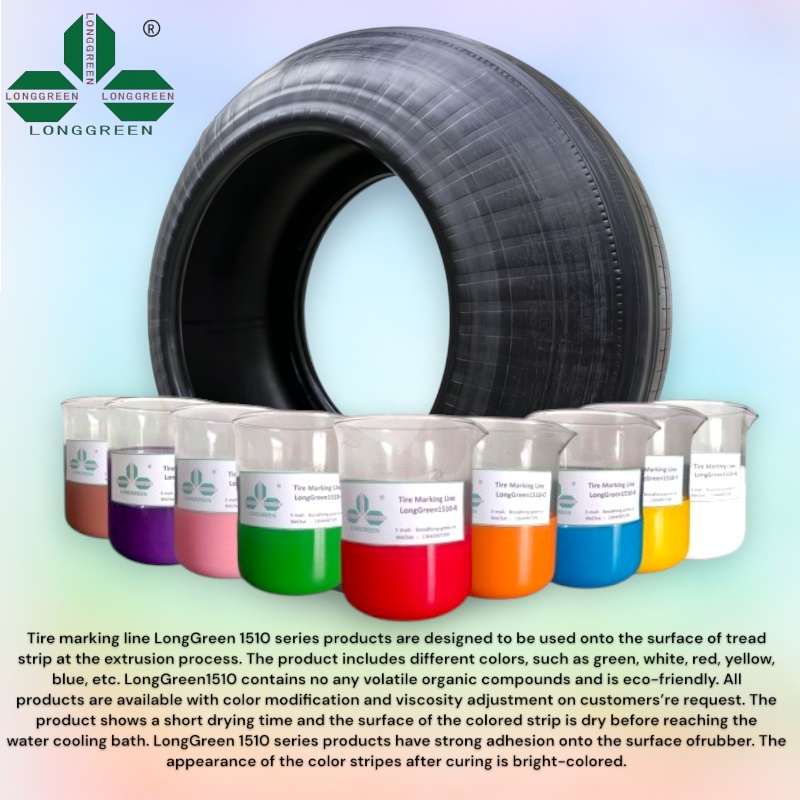
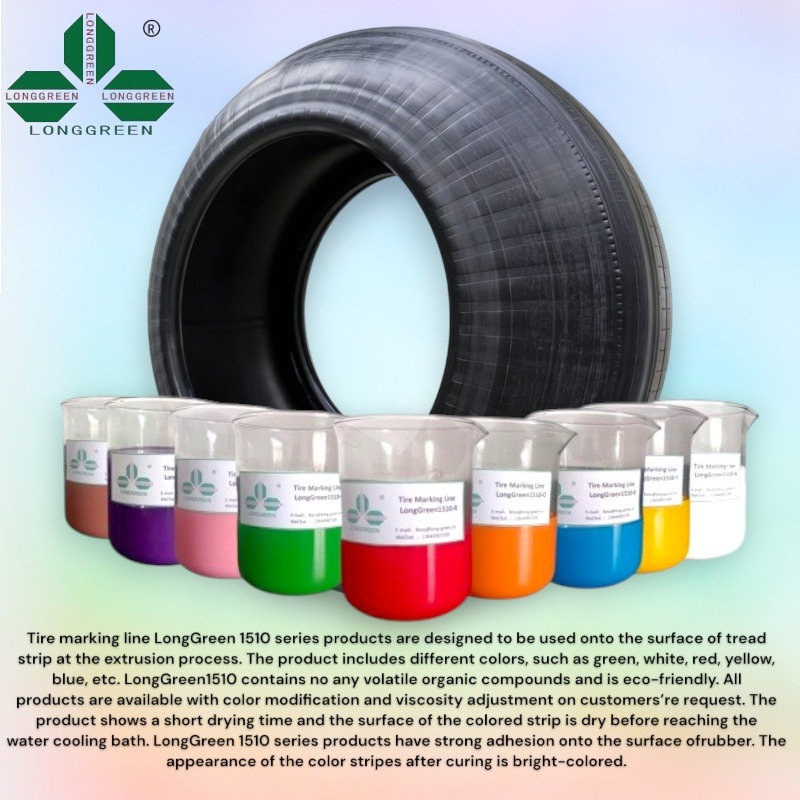
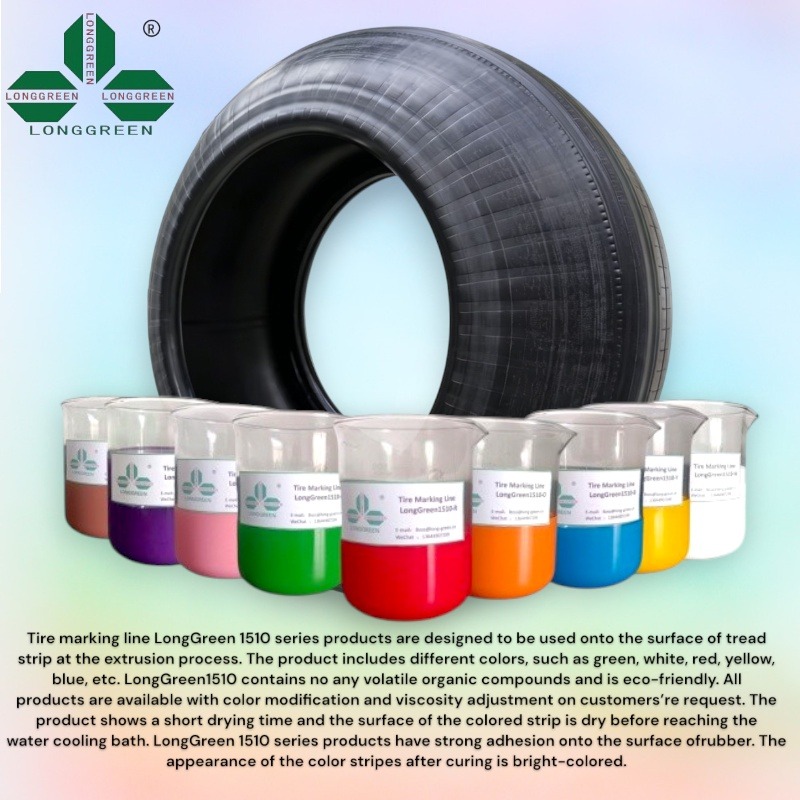
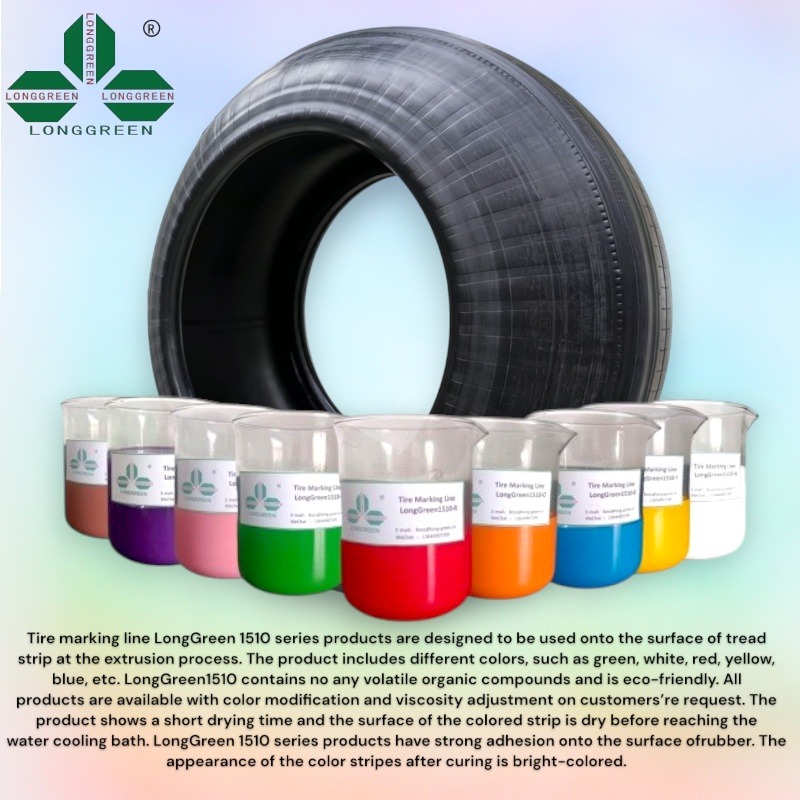
The LongGreen1510 series is developed specifically to match the working characteristics of mechanical marking wheels. Its viscosity is finely tuned for roller application, allowing the paint to flow evenly and smoothly through wheel grooves. It never clogs equipment, no matter how long the production line runs continuously.
The biggest advantage users notice right away is its fast-drying performance. Unlike ordinary water-based paint that takes a long time to cure, LongGreen1510 dries in seconds once applied by the marking wheel on tire sidewalls. This quick curing ability keeps colored lines crisp and intact during tire transmission, stacking and high-temperature vulcanization. There is no color bleeding, no blurring, and no deformation of batch identification marks.
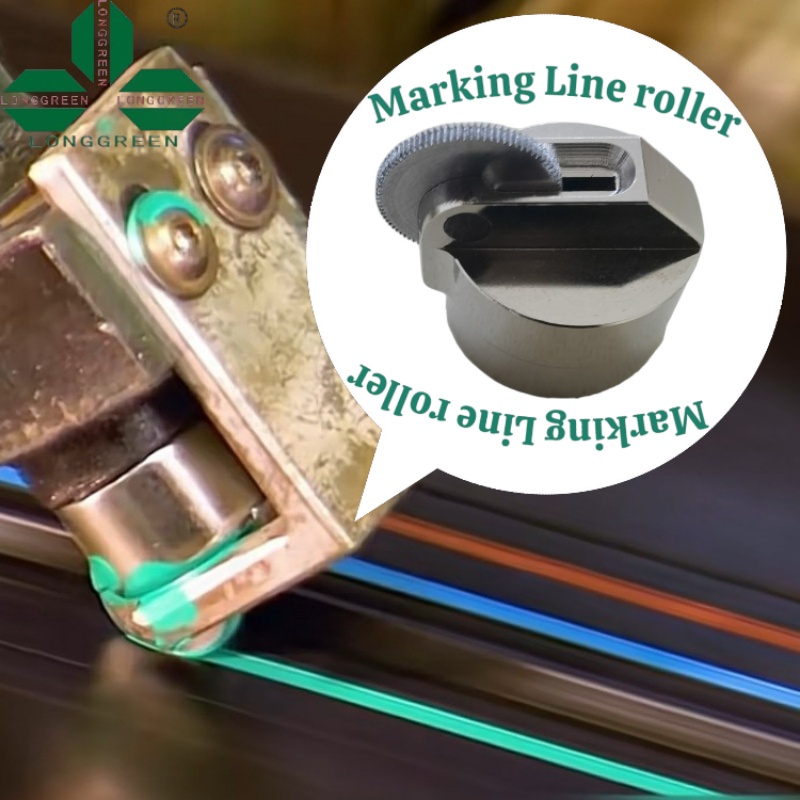
When it comes to adhesion, this formula outperforms most conventional water-based alternatives. Raw tire rubber often carries residual release agents and uneven surface tension, making it hard for common paints to bond steadily. LongGreen1510 adopts rubber-friendly binding ingredients that fit perfectly with natural and synthetic rubber materials. When applied via mechanical marking wheels, the uniform roller pressure pushes paint into the tiny textures on the rubber surface, forming a solid, long-lasting bond instead of a superficial coating.
The final marks can withstand stretching, pressing and high-temperature curing without peeling, fading or rubbing off. This greatly reduces defective tires caused by unclear or fallen-off marks.
Factory technicians also see obvious efficiency improvements after switching to this matching system. Clogged marking wheels used to require frequent shutdowns for cleaning, which interrupted continuous production. With LongGreen1510’s stable fluidity, equipment maintenance frequency drops significantly, saving plenty of downtime and labor costs. Many tire factories report a sharp drop in marking-related rework rates after long-term use.
In terms of environmental compliance, this water-based marking solution is fully compliant with EU REACH and mainstream industrial environmental standards. It contains no harsh solvents or strong volatiles, creating a safer and cleaner workshop working environment. In addition, post-production cleaning is hassle-free. Marking wheels and equipment parts can be cleaned directly with water, without any corrosive chemical cleaners.
To sum up, tire marking stability cannot be achieved by simply upgrading paint or replacing equipment separately. The best results come from matching professional mechanical marking wheels with formula-matched water-based marking paint. For tire factories pursuing high efficiency, stable marking quality and environmental compliance, the combination of marking wheels and LongGreen1510 series offers a practical, reliable and cost-effective solution for daily tire production marking.