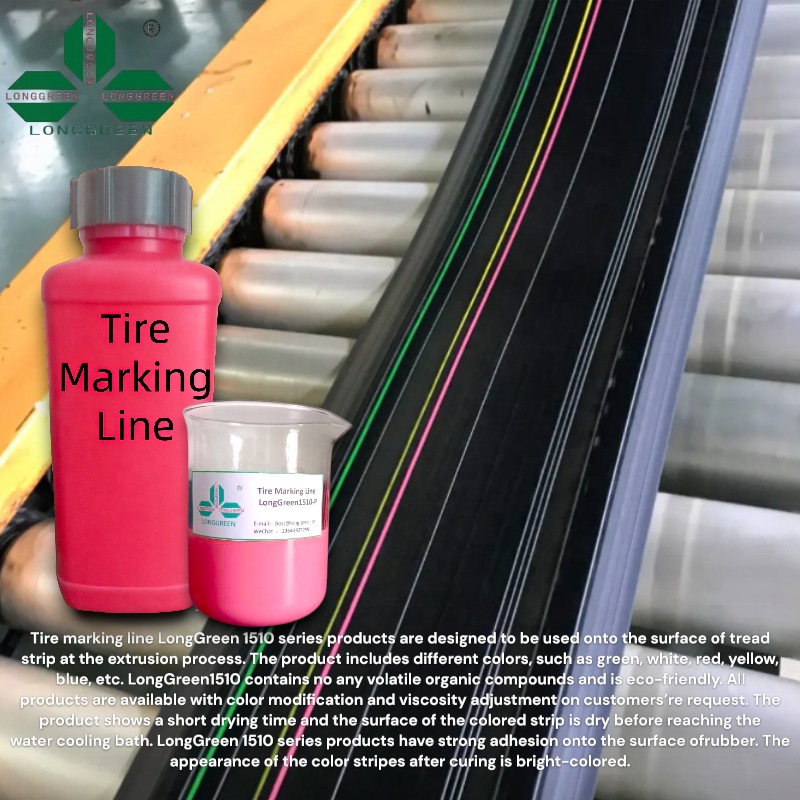
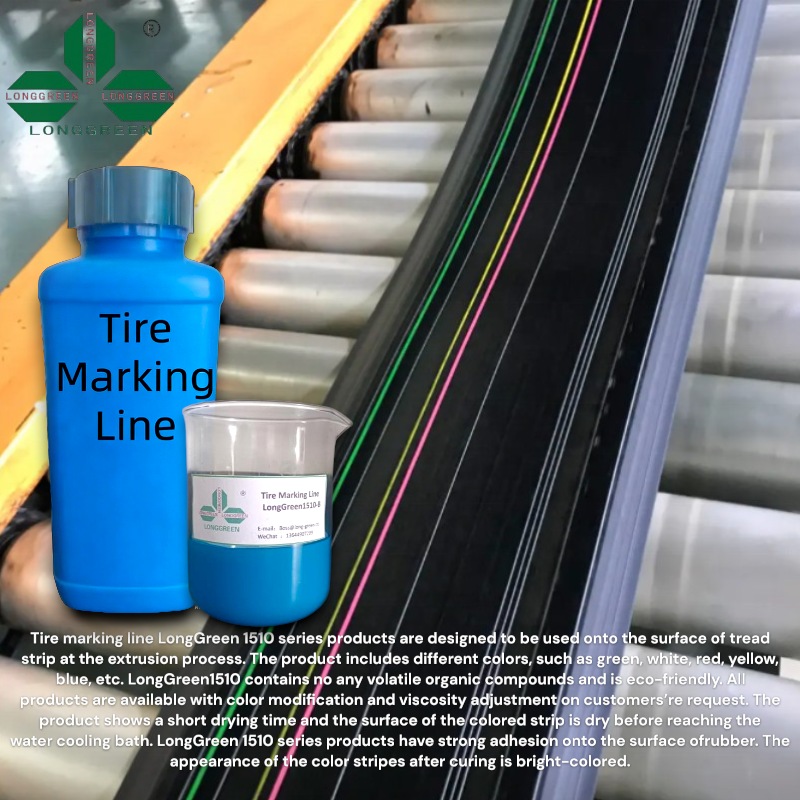
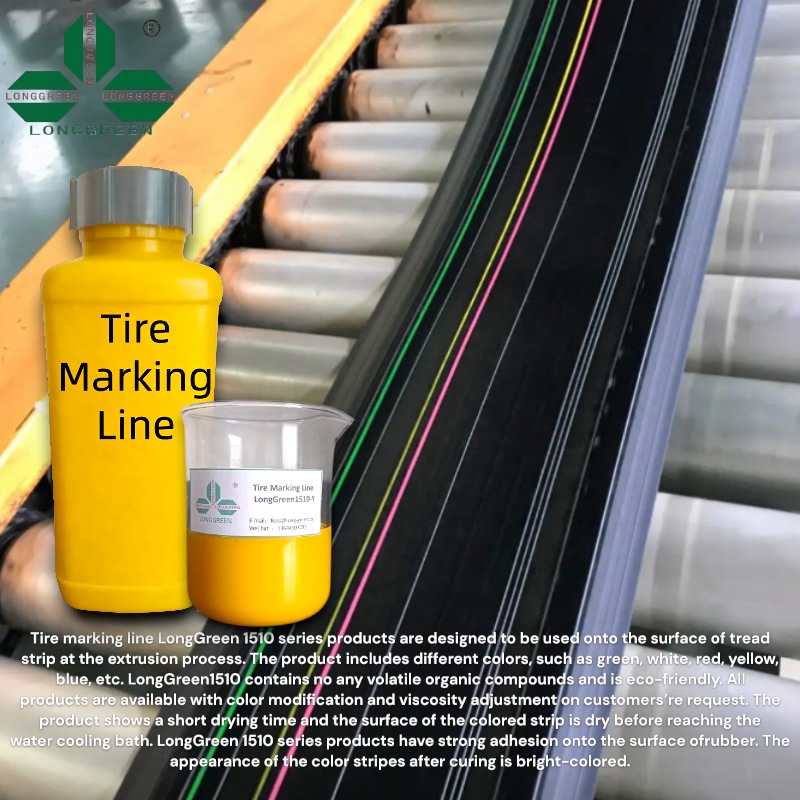
When making rubber products, manufacturers rely on simple helper chemicals to stop sticking issues, speed up production, and keep goods in good quality. Two of the most common products people use here are rubber separating agents and rubber mold release agents.
Since both of them stop materials from sticking together, a lot of factory workers and business owners mix them up. Using the wrong one leads to faulty rubber parts, messy production delays, and unnecessary extra costs.
Even though these two products do similar anti-stick jobs, they work on different materials, are used at different production stages, and handle different heat levels. In this guide, we break down exactly how they work, when to use each one, and what problems they solve — in plain, simple English.
What Is a Rubber Separating Agent?
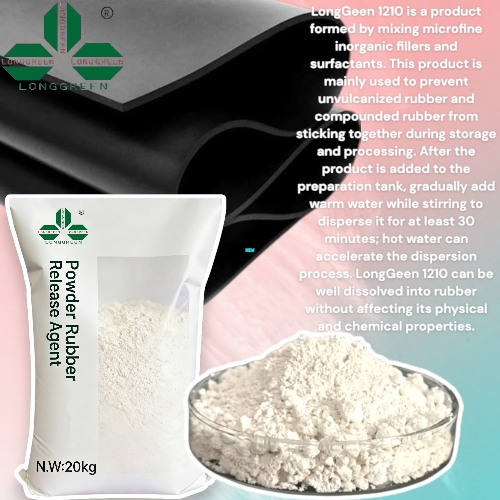
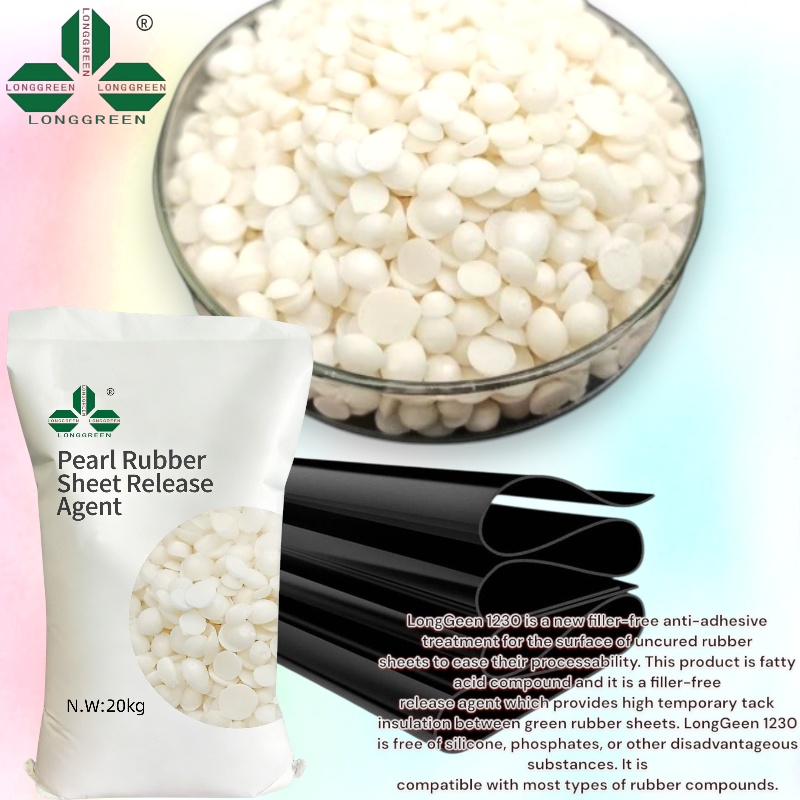
A rubber separating agent (also called an anti-stick agent) is a basic rubber processing product made for raw, uncured rubber materials.
Its only main job is to keep pieces of rubber from sticking to each other while they sit in storage or move through early production steps.
What it works on: Rubber touching rubber
When to use it: Before any high-heat curing (during mixing, rolling, pressing, shaping, and storing raw rubber pieces)
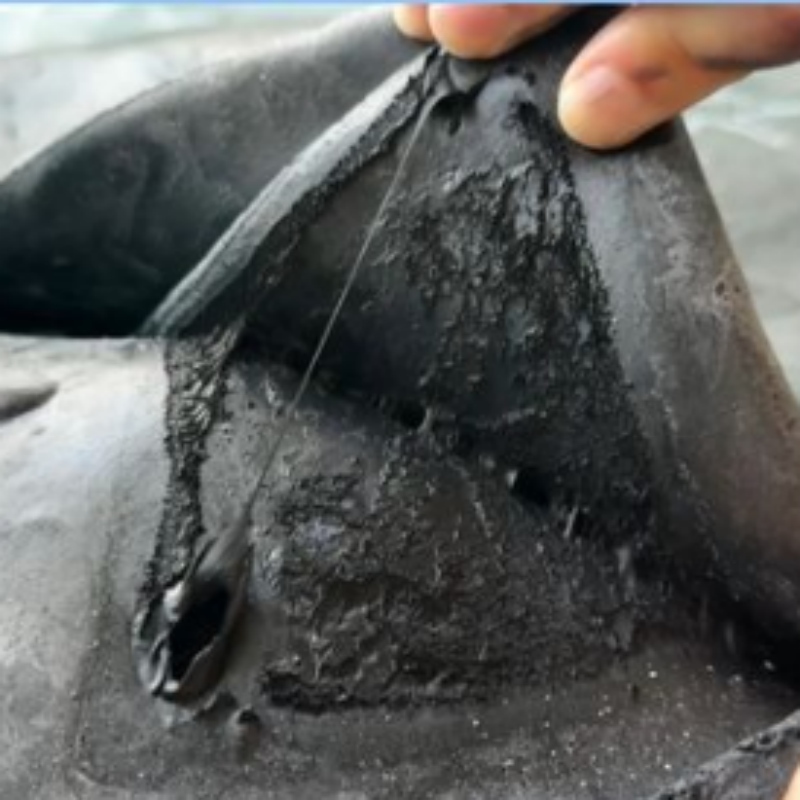
Raw rubber is naturally very sticky. When you stack rubber sheets or roll up rubber strips, they will stick together tightly. A separating agent adds a super thin barrier layer on the rubber surface. This keeps all rubber pieces loose and separate, and it won’t mess up later heating, curing, or gluing steps.
What Is a Rubber Mold Release Agent?
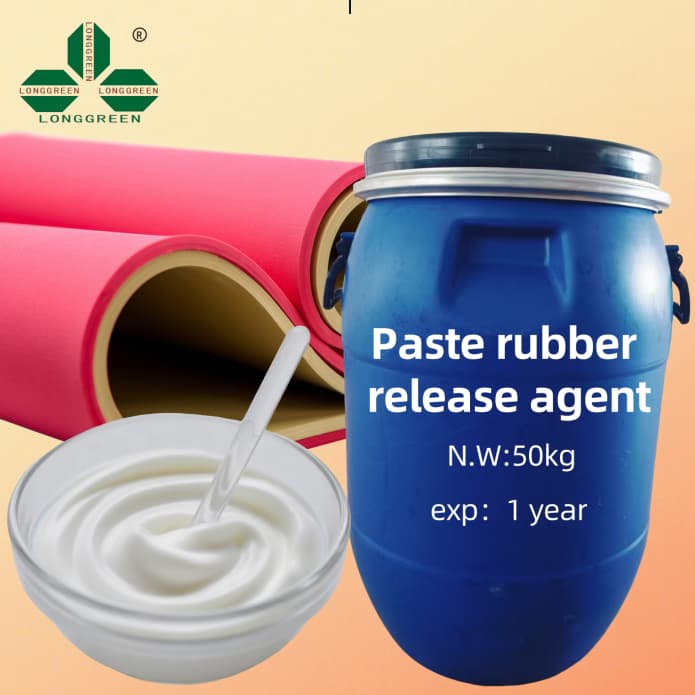
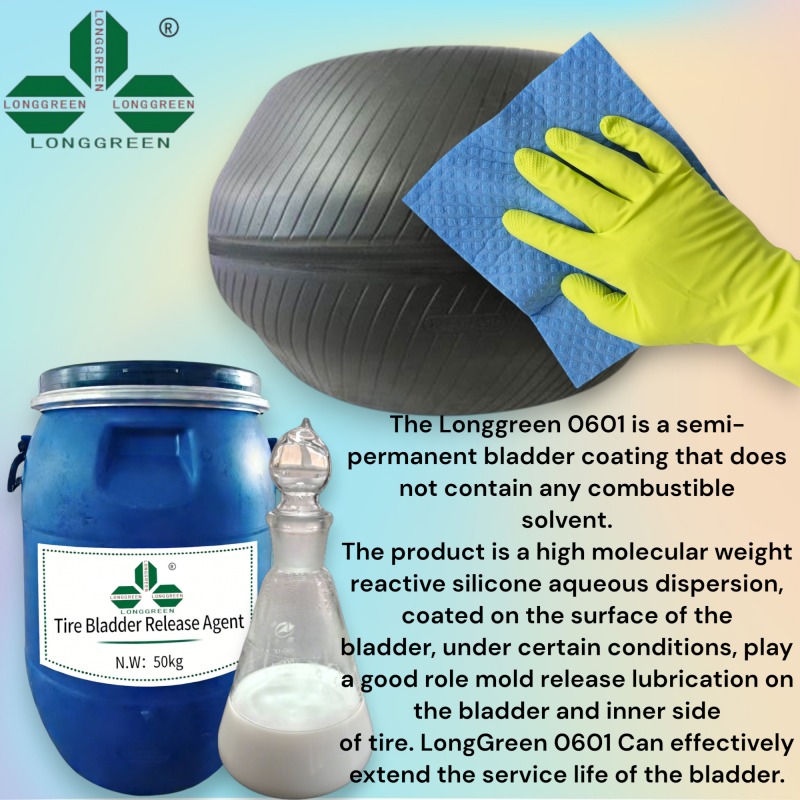
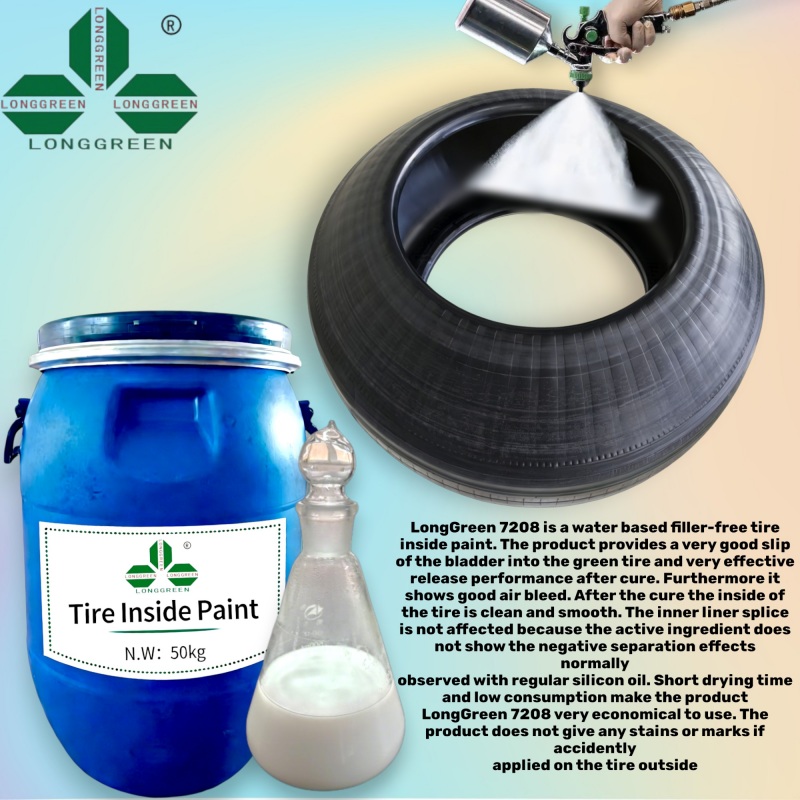
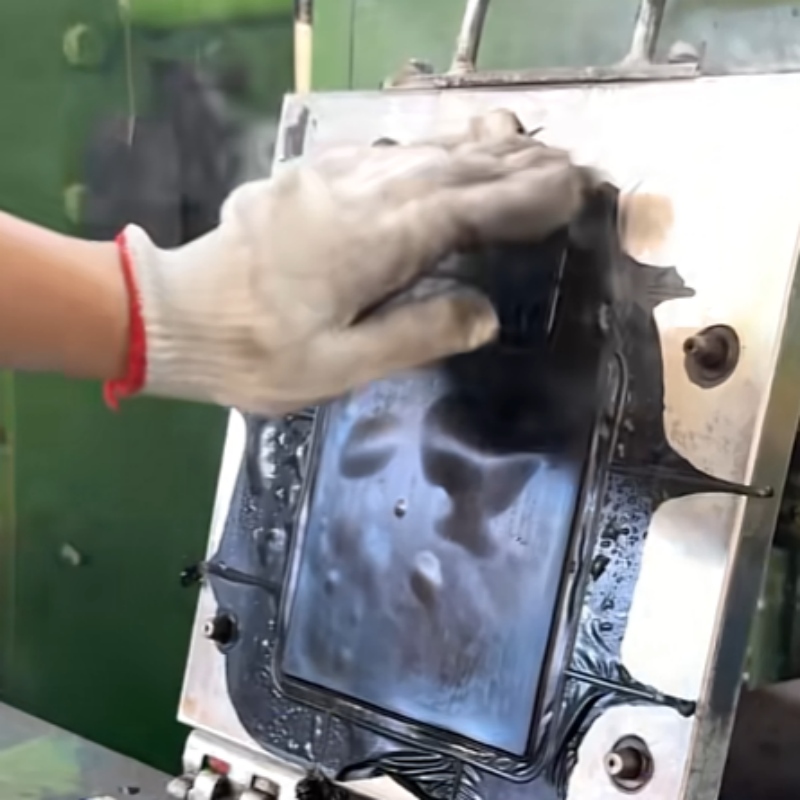
A rubber mold release agent is a heat-resistant product made specifically for rubber curing and molding.
It fixes the common problem where finished rubber parts stick to metal molds after being cooked under high heat and pressure.
What it works on: Rubber touching metal molds
When to use it: During the high-heat curing stage (150–200°C hot molding process)
When rubber gets hot inside a mold, it softens and presses tightly into every corner of the mold. Without a release agent, the new rubber part will get stuck hard inside the mold. This ruins the part’s shape, scratches the surface, and makes it really hard to take the product out. A mold release agent creates a smooth, heat-stable film on the mold so finished rubber parts pop out easily every time.
Main Differences Between the Two Products
Because they are used in totally different production steps, these two products have very different heat tolerance, lifespans, and working effects. Here is a simple side-by-side comparison:
Comparison Item | Rubber Separating Agent | Rubber Mold Release Agent |
|---|
Heat Resistance | Only works for normal room temperature up to 100°C. Breaks down and burns easily at high heat | Handles high heat perfectly. Stays stable at 150–200°C without burning or leaving residue |
Surface Coating Effect | Coats fast, sticks lightly, and wipes off easily when needed | Forms a tough, steady, non-reactive coating that won’t move or rub off |
Effect on Rubber Curing | Does not change how fast rubber cures or how strong the final rubber becomes | No cloudy marks, no air bubbles, and no dirty spots on finished rubber products |
Usage Lifespan | Works for one-time use only, wears off during rubber processing | One single spray works for 10–50 molding cycles |
Core Job | Stops rubber pieces from sticking to other rubber pieces | Stops rubber parts from sticking to metal molds |
To put it in the simplest terms: A rubber separating agent fixes rubber sticking to rubber at room temperature. A rubber mold release agent fixes rubber sticking to metal molds under high heat and pressure.
Knowing the difference between these two common helpers lets factories cut down on faulty goods, make molds last longer, and run the whole rubber production process more smoothly.
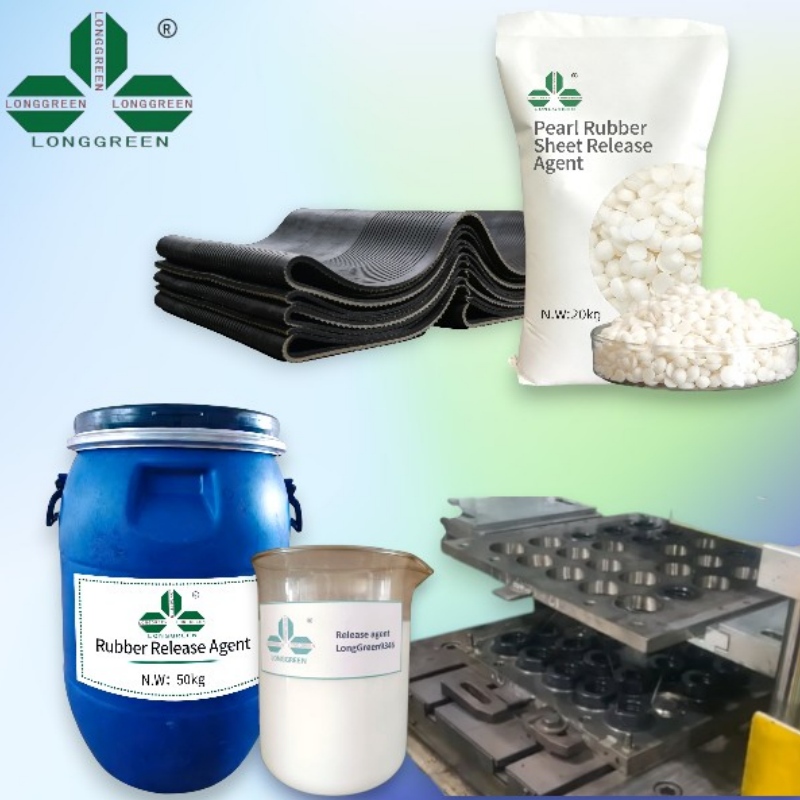
Shenyang Longgreen Science & Technology Co., Ltd. is a professional manufacturer specializing in the R&D and production of rubber separating agents and rubber mold release agents. Our factory has successfully passed ISO9001 quality management system, ISO45001 occupational health and safety management system and ISO14001 environmental management system certifications. We adhere to strict production standards and professional technical capabilities to provide stable, high-quality products and reliable one-stop services for global customers in the rubber industry.