
Have you ever bought brand-new tires with raised white letter detailing? If so, you’ve probably caught sight of a subtle blue haze covering every inch of those white markings straight out of the packaging. It’s pretty typical for drivers to jump to negative conclusions here. A lot of people write it off as botched paint work from the factory, a manufacturing defect, or just random dirt and residue left behind during white letter tire production.
This misunderstanding is super common among regular car owners, but that blue layer is far from a mistake. It’s a deliberate addition made during production and serves a critical protective role in the white letter tire manufacturing process. I’m going to break down all the key details in this guide: the true nature of this blue coating, why tire factories worldwide depend on this protective solution, and exactly how LongGreen 066A White Sidewall Protection Fluid has emerged as the go-to product for protecting tires with white lettering and white sidewall finishes across the industry.
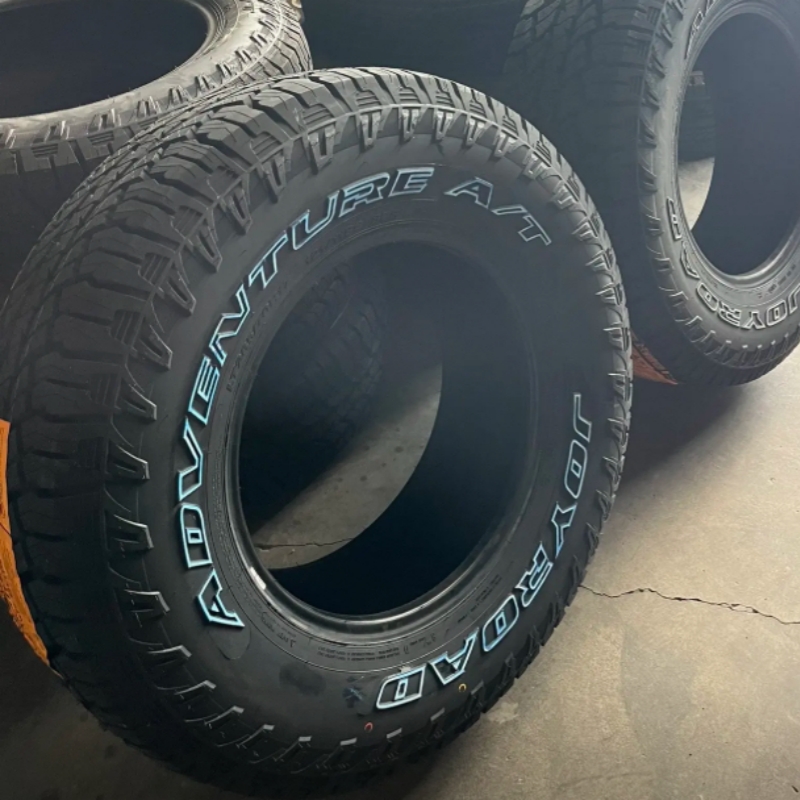
You can put all your concerns to rest right now. That faint blue coloring isn’t a sign of damage, nor is it any sort of factory oversight. It’s a water-soluble, short-term protective film that workers spray onto white tire lettering right before finished white letter tires ship out of the production plant. It’s one of the final finishing steps done to prep tires for retail sale and customer use.
Manufacturers apply this coating specifically to combat a frustrating, inherent quirk of standard tire rubber materials. The black rubber used for tire sidewalls is blended with processing oils and antiozonant compounds. These essential additives don’t stay locked inside the rubber permanently — they slowly migrate and seep out over the course of time.
When white letter tires sit stacked in warehouses or get shipped long distances for weeks or even months, these oils rub off onto every surface they touch. White letter rubber uses an entirely different formula — it’s way more porous and sensitive. Once those oils from black rubber sink into the white lettering, they leave permanent brown stains, yellow discoloration and stubborn scuffs that you’ll never be able to clean out completely.
If you’ve ever seen how white letter tires are handled after they’re made, you’ll understand why this protection is non-negotiable. They get stacked dozens tall for white letter tires on warehouse racks, crammed tightly into shipping containers, and bounced around nonstop during transit. Without a proper protective barrier, those crisp, bright white letters you pay extra for will turn dull, scuffed and stained long before they ever get mounted on a vehicle. That thin blue film acts as a disposable shield for the entire supply chain. It stops oil transfer between stacked white letter tires, prevents friction scuffs during storage and transport, and keeps dust, grime and mild UV exposure from ruining the brand-new white finish. Once the white letter tires arrive at shops or end up with customers, a quick clean with warm soapy water wipes the blue film right off, leaving flawless, fresh-out-the-factory white lettering underneath.
Here’s the thing though: not all white letter tire sidewall protectors are created equal, and cheap generic options cause tons of headaches for tire factories. Most low-cost coatings on the market leave sticky, gunky residue that’s nearly impossible to remove, even with strong cleaning solutions. Some budget formulas even react with white rubber over time, making the lettering yellow prematurely and ruining the tire’s look while it’s just sitting in storage. That’s exactly why LongGreen 066A was developed specifically for white sidewall and white letter tire production. It fixes every major flaw you get with generic protectants and fits seamlessly into regular factory workflows, no extra adjustments needed.
What makes LongGreen 066A stand out in real-world factory use is just how consistent and dependable it is. It’s a water-based polymer fluid with a perfectly balanced viscosity, so it glides on smooth and even every single time. Workers can apply it with a spray gun or a soft brush just on the white letter areas, and it dries into a tight, uniform protective film in around 15 minutes under normal factory room conditions. There’s no messy dripping, no thick buildup on tire shoulders, and no thin, patchy coverage that leaves parts of the white lettering exposed. It cuts out almost all the extra rework factories used to deal with because of shoddy, inconsistent cheap coatings.
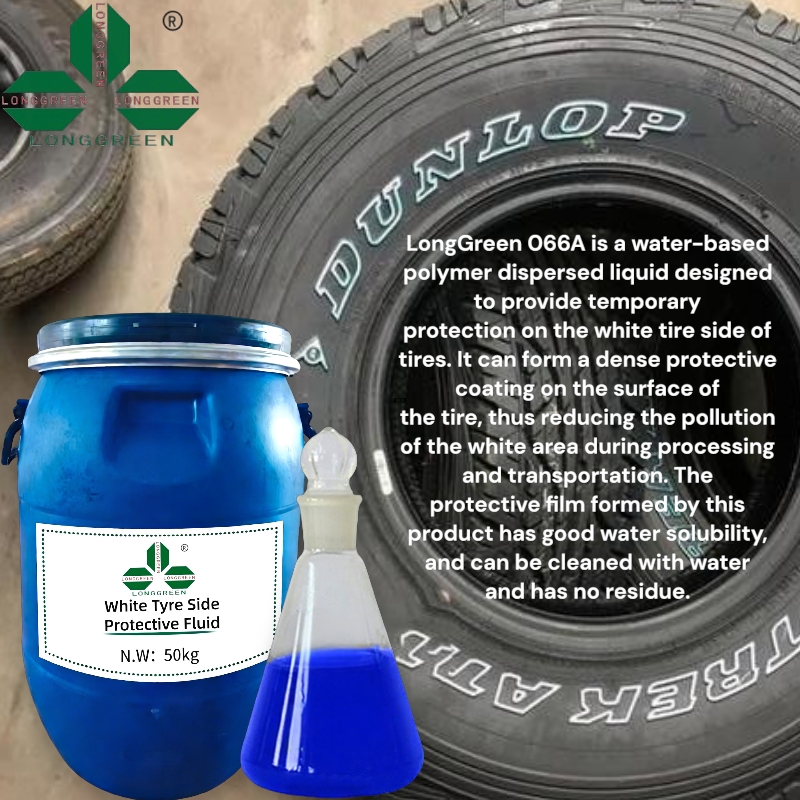
Ease of removal is hands down its best feature. Unlike old wax-based protectors that leave sticky gunk trapped deep in the tiny grooves of lettering, LongGreen 066A’s film dissolves completely in plain water. You don’t need harsh chemical solvents, heavy-duty degreasers, or tough scrubbing to get rid of it. Even if coated tires sit in warehouse storage for six months or longer, a simple wipe or rinse with warm water removes every last bit of the blue coating. It never leaves sticky leftover residue, never dulls the clean white rubber finish, and never causes early yellowing or fading on delicate white tire compound.
It also delivers rock-solid protection against the two biggest threats to white tire lettering: oil bleeding and surface scuffs. Once fully cured, the polymer film forms a dense, impenetrable barrier that stops oily additives from black rubber from seeping into white letter surfaces during stacking and shipping. It also adds just enough scratch resistance to prevent minor abrasions when white letter tires rub against each other in containers or on warehouse racks. This one feature alone drastically cuts down on defective tires and production waste. Every factory that switches over to LongGreen 066A notices a huge drop in white sidewall tire rejects caused by transit and storage contamination.
On top of its great performance, it’s way safer and gentler on rubber than harsh chemical alternative coatings. It’s non-toxic, eco-friendly, and contains no volatile harsh solvents that wear down and damage rubber over time. It won’t make white sidewall rubber harden, crack or degrade during long-term storage, and it complies with all global manufacturing environmental standards. Workers can apply it daily without needing special ventilation systems or heavy protective gear, which makes it super practical for mass production lines.
It’s also extremely versatile and works with every style of white letter tire construction out there. It bonds perfectly to molded integrated white rubber letters and bonded white sidewall strips alike, with no peeling or flaking down the line. It works flawlessly on passenger tires, light truck tires, 4x4 off-road tires, and heavy-duty tire lines, with zero compatibility issues. You don’t need any specialized spraying equipment to use it either, so factories don’t have to invest in new machinery or upgrade their existing setups to implement it.
I get asked all the time about the product’s shelf life and why the fluid is blue in the first place. Sealed drums of LongGreen 066A stay stable for a full 12 months under standard indoor warehouse conditions — no liquid separation, no weakened protection, no wasted product. As for the blue color? It’s just a simple visual guide for production teams. It lets workers instantly spot exactly which white letter areas are fully coated and which spots are missed, so there’s no guesswork during fast-paced mass production runs.
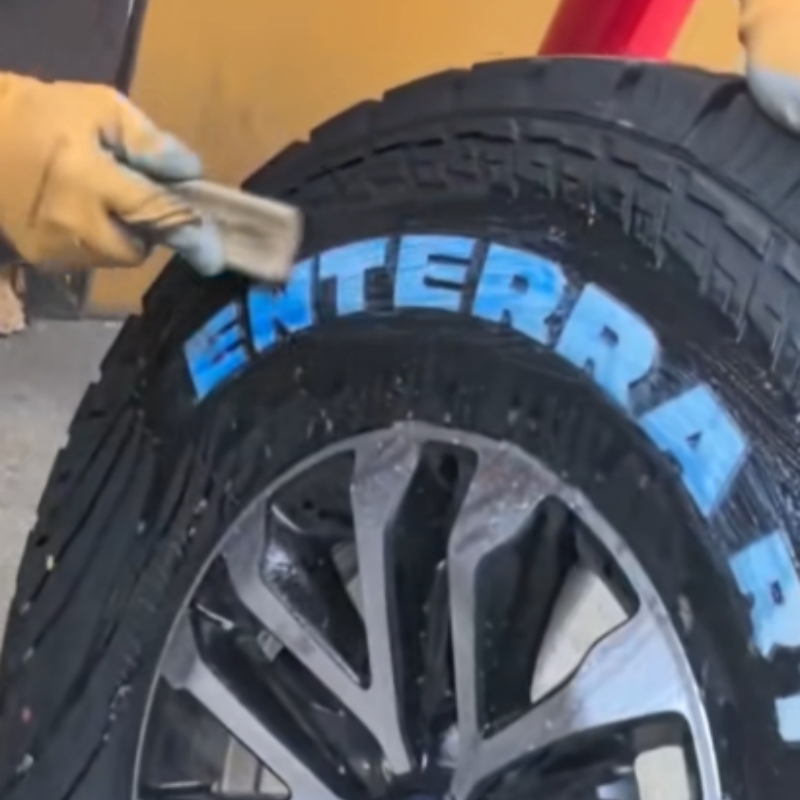
At the end of the day, that mysterious blue coating on brand-new white letter tires isn’t a defect at all. It’s a vital protective layer that preserves your tires’ pristine look from the factory floor all the way to installation. Most generic protective fluids end up causing more problems than they fix, but LongGreen 066A is custom-built to solve the unique challenges of white sidewall tire production. It’s consistent, easy to apply, leaves zero residue, and drastically cuts down on manufacturing waste. If you’re tired of dealing with stained, scuffed and discolored white letter tires from storage and shipping, this professional-grade protection fluid is the reliable, cost-effective solution the tire industry has trusted for years.
