
When making tires, steady good quality and fast, smooth production rely on many key materials. The liquid sprayed inside tires is one of the most critical ones, even though most people don’t pay much attention to it. This special spray liquid is super important for making good tires. It makes the tire heating and shaping process go smoothly, reduces faulty tires, and makes both tires and production machines last longer. This article will talk about what this inner tire spray liquid does, why you can’t make tires without it, and the differences between the two common types: one with added fillers and one without fillers.
Tire Inner Spray Liquid – Basic Functions
Tire inner spray liquid is a water-based liquid. Workers spray it on the inside of new, unheated tires before putting them into machines for heating and shaping. It creates a protective layer between the inside of the tire and the soft air bag inside the tire-making machine. It brings lots of real benefits that directly affect how fast you make tires and how good the final tires are:
1. Stops Tires from Sticking to Machines
The main job of this spray liquid is to prevent the inside of the tire from sticking to the machine’s air bag when the tire is heated at high temperatures. If you don’t use this liquid, the tire rubber will stick firmly to the air bag. When you try to separate them, the inner layer of the tire will tear, the machine’s air bag will get damaged, and the whole tire will be ruined. This anti-stick effect makes it easy to take finished tires out of the machine, avoids production delays, and lets the expensive machine air bags last much longer.
2. Lubricates Tires for Even Shaping
This inner spray liquid forms a thin, smooth slippery layer inside the tire. This lets the machine’s air bag fit perfectly against the inner wall of the tire. As a result, the tire shapes evenly during heating. You won’t get tires with uneven thickness or lopsided shapes. The smooth slippery layer also keeps the tire centered in the machine, so the finished tire runs more steadily and smoothly at high speeds.
3. Removes Trapped Air to Avoid Tire Defects
Air often gets stuck between the tire’s inner layer and the machine’s air bag during production. The inner spray liquid helps push out this trapped air. It either creates tiny gaps for air to escape or reduces surface tension to let air flow out easily. This stops air bubbles, empty gaps or weak glue spots from forming inside tires. These flaws make tires weak, and can lead to dangerous problems like bulges or layered peeling when people use the tires on the road.
4. Improves Inner Surface & Extends Tire Life
Using good inner spray liquid makes the inside of tires smoother and cleaner, which improves the overall performance of the tire’s inner layer. It also protects tires from moisture and air oxidation, slowing down aging and cracking. This makes the tires more durable and last longer in daily use.
Why You Must Use Tire Inner Spray Liquid
Many tire makers wonder if this spray liquid is truly necessary, or just an extra optional step. In fact, skipping this step will cause big problems that slow down production, ruin tire quality, and cut your profits:
Tire & Machine Damage, More Waste
Without inner spray liquid, tires will stick to the machine’s air bags during heating. Forcing them apart tears the tire’s inner lining, damages the air bags, and creates more defective, wasted tires. Replacing broken air bags and reworking bad tires costs extra money and slows down your whole production line.
Uneven Shaping Leads to Low-Quality Tires
No spray liquid means no slippery layer for even fitting. The machine’s air bag can’t attach evenly to the tire, causing lopsided tires, uneven rubber thickness and poor balance. These faulty tires perform badly: they shake a lot at high speeds, create more noise, and are much less safe to drive on.
There are two common types of tire inner spray liquid: one with no solid fillers and one with solid fillers. Both help with tire heating and shaping, but they are made differently, work differently, and fit different tire production needs:
1. Different Ingredients
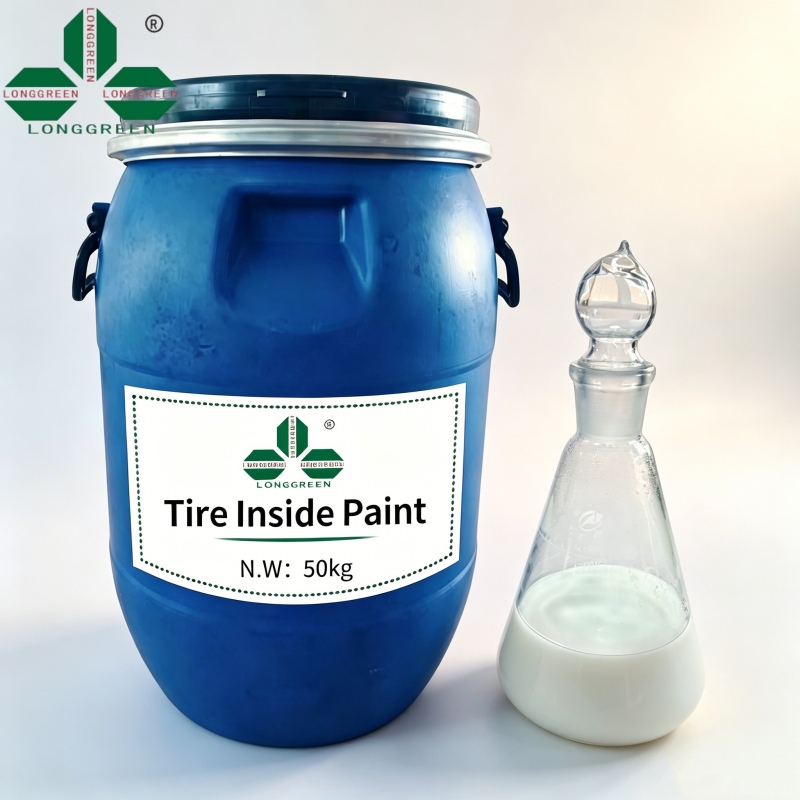
Filler-Free Inner Spray Liquid: Made of pure silicone emulsion, with no extra solid powders like mica powder, talc or silica. It’s a smooth, uniform liquid with no sediment, and stays stable and consistent even after long-term storage.
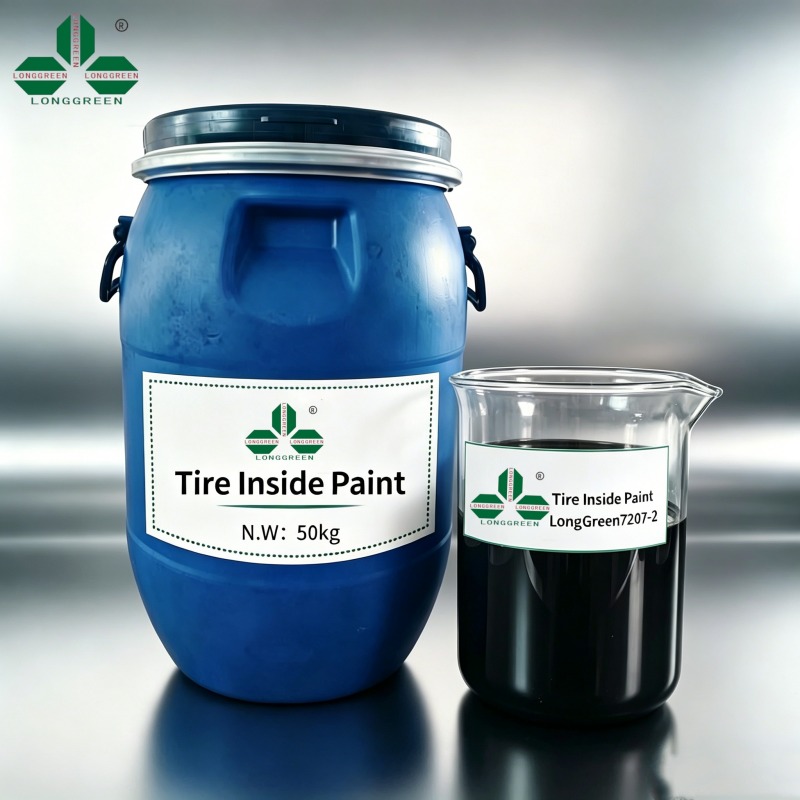
Filler-Added Inner Spray Liquid: Based on silicone emulsion, but mixed with tiny solid fillers such as mica powder, talc or kaolin clay. These solid particles float in the liquid and will sink and separate if left sitting. You need to stir it thoroughly before use every time.
2. Different Performance
Air Removal Ability: Filler-free liquid relies on the texture of the machine’s air bag to release air. It works fine for thin-walled tires that let air escape easily. Filler-added liquid uses its tiny solid particles to build micro air channels, which removes trapped air much better. It’s perfect for thick-walled tires and high-pressure tires that easily trap air inside.
Inner Tire Cleanliness & Look: Filler-free liquid forms a thin, smooth, glossy coating. It leaves the inside of tires bright, clean and totally residue-free, making it ideal for high-end tires. Filler-added liquid forms a thicker, rougher matte coating with a slight powdery feel. It may leave faint marks inside tires and doesn’t look as neat.
Fit with Post-Production Processes: Filler-free liquid leaves no solid residue, so it won’t affect follow-up work like adding self-repair sealant or sound-absorbing layers inside tires. Filler-added liquid may leave filler residue, which can weaken the adhesion of later coatings. You’ll need an extra cleaning step to fix this.
Ease of Use & Cost: Filler-free liquid is very stable. You can dilute it with water (ratio 1:1 to 1:3), sprays smoothly, and never clogs spray equipment. You use less volume per tire, but the liquid itself is a bit more expensive. Filler-added liquid cannot be diluted with water. It needs frequent stirring to prevent particle sinking, and may clog spray tools. But it has higher solid content, costs less, and is great for large-scale mass production.
3. Different Usage Scenarios
Filler-Free Inner Spray Liquid: Best for passenger car tires, high-performance tires and other high-end tires that require a clean inner surface and need follow-up inner treatments. It’s also suitable for thin-walled tires and production lines that prioritize easy machine maintenance and clean production environments.
Filler-Added Inner Spray Liquid: Perfect for heavy-duty tires, including truck tires, off-road tires, farm tires and construction machinery tires. It works best for thick-walled, high-pressure tires that are prone to trapping air, and for standard tires produced in large batches where cost control is a top priority.
Our Tire Inner Spray Liquid Products
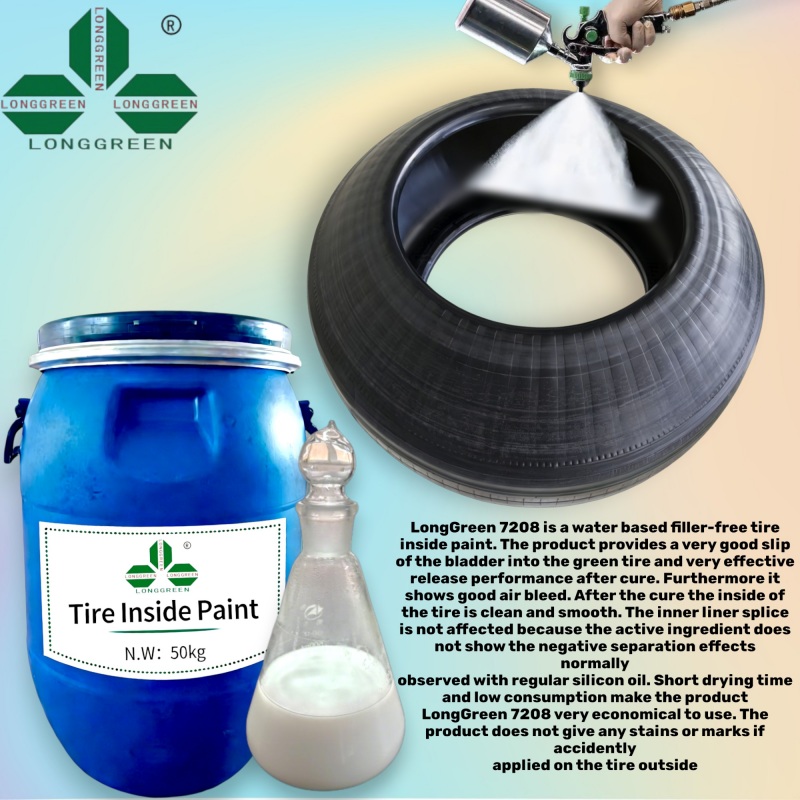
Shenyang Longgreen Science & Technology Co., Ltd. provides high-quality tire inner spray liquid solutions for all kinds of tire production needs. We have two core products: LongGreen7208 (filler-free type) and LongGreen7207 (filler-added type). Both are water-based and solvent-free, fully meeting the strict requirements of modern tire manufacturing. They can smooth out your tire heating and shaping process, cut down defective tire rates, and greatly improve your production efficiency.
