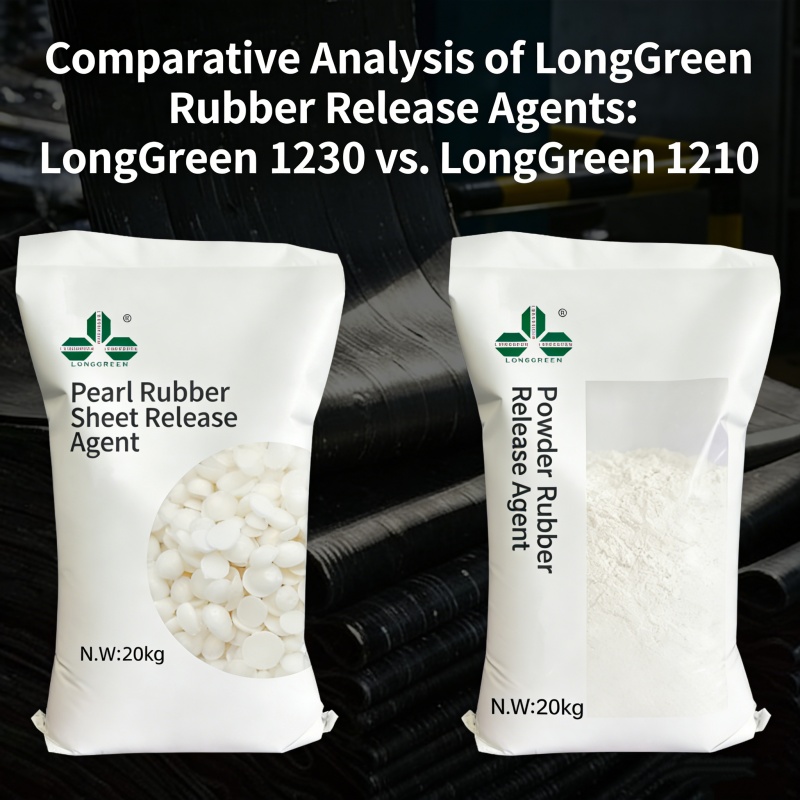
In the manufacturing of rubber products, anti-adhesion treatment for uncured rubber sheets is a critical process that directly impacts production efficiency, workshop environmental safety, and the final performance of finished goods. Shenyang LongGreen Science & Technology Co., Ltd., a professional provider of rubber processing auxiliary materials, has developed two targeted release agent solutions to address the adhesion challenges of unvulcanized rubber during storage and processing: LongGreen 1230, a high-performance Pearl Particle Release Agent, and LongGreen 1210 Powder Rubber Release Agent. As a forward-looking upgrade to traditional powder release solutions, the Pearl Particle Release Agent category has been widely recognized in the rubber industry for its balanced performance in safety, efficiency, and cost control. While both products are designed to deliver reliable anti-adhesion performance for rubber sheet processing, they differ significantly in formulation design, physical form, operational suitability, and comprehensive application benefits. This analysis breaks down the core differences between the two products to help rubber manufacturers select the optimal solution aligned with their production needs.
1. Core Formulation and Material Composition
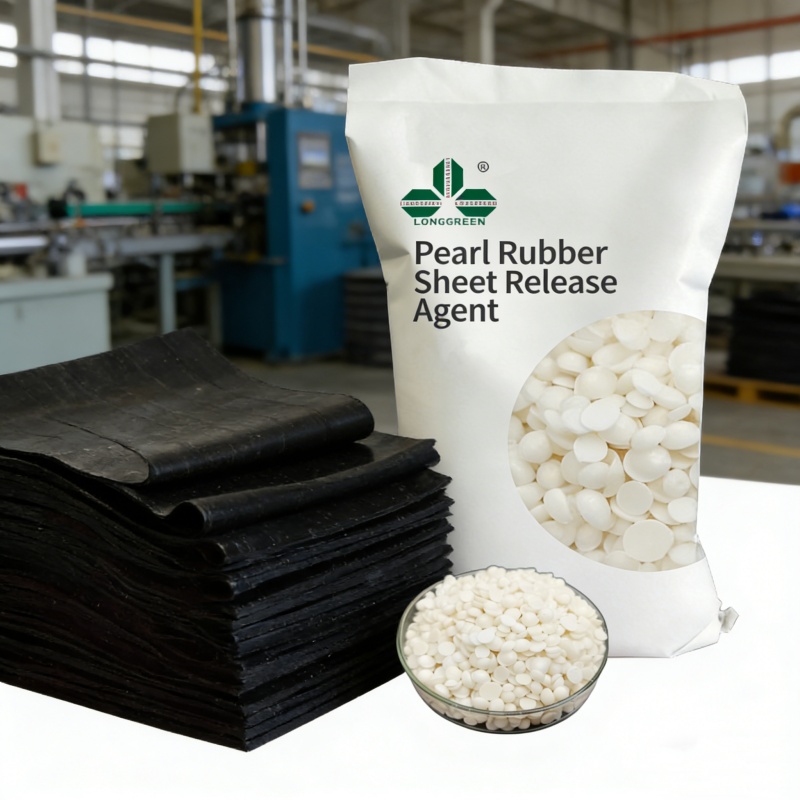
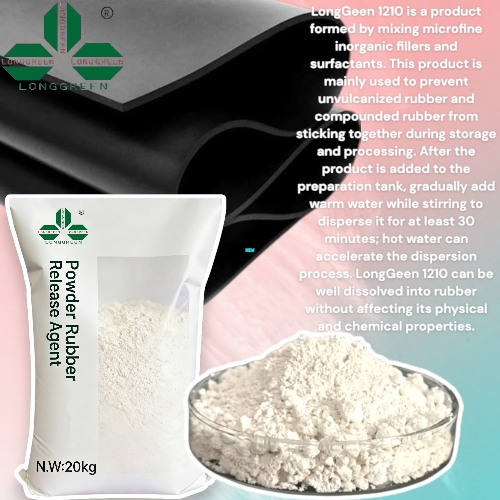
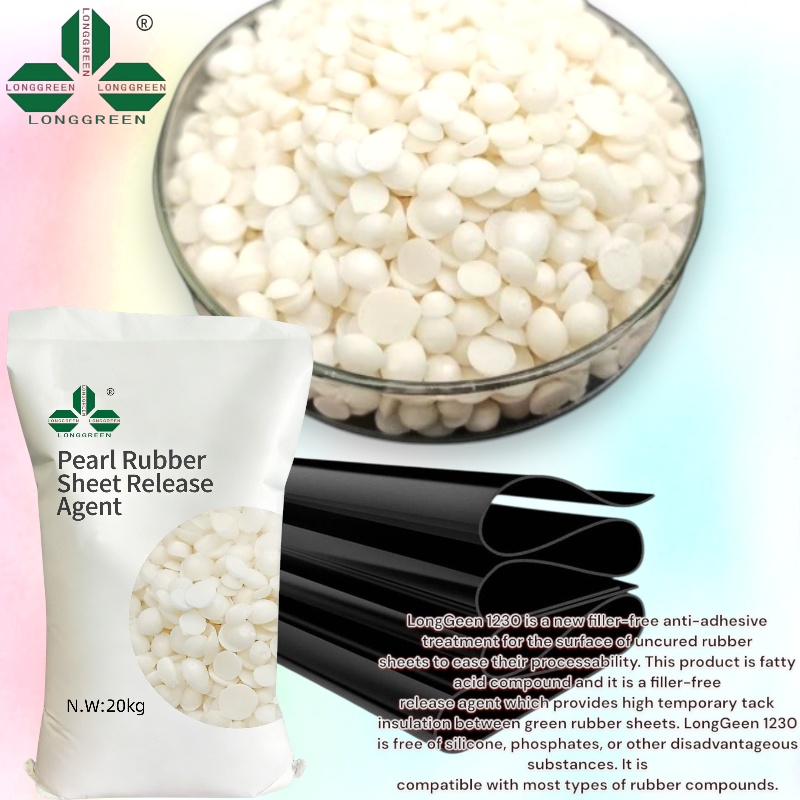
The fundamental difference between the two products lies in their raw material formulation, which defines their core performance boundaries. LongGreen 1210 Powder Rubber Release Agent is a blend of microfine inorganic fillers and specialized surfactants, presented as a grey-white to light-yellow powder. Its anti-adhesion mechanism relies on the formation of a flexible isolation film on the surface of uncured rubber sheets via the synergistic effect of inorganic fillers and surfactants. The product is designed to disperse into the rubber compound during subsequent mixing and vulcanization processes, with no adverse impact on the basic physical and chemical properties of the final rubber products. In contrast, LongGreen 1230 is a filler-free fatty acid compound-based Pearl Particle Release Agent. Formulated without silicone, phosphates, or other harmful substances, this product delivers high-efficiency temporary tack insulation between green rubber sheets, with excellent compatibility with most types of rubber compounds. Its filler-free formula eliminates the risk of inorganic filler residue on rubber surfaces, a common pain point for powder-type release agents, ensuring a cleaner finish on processed rubber sheets. This non-residue feature is one of the core advantages that distinguish this Pearl Particle Release Agent from traditional powder alternatives.
2. Physical Form and Operational Safety & Convenience
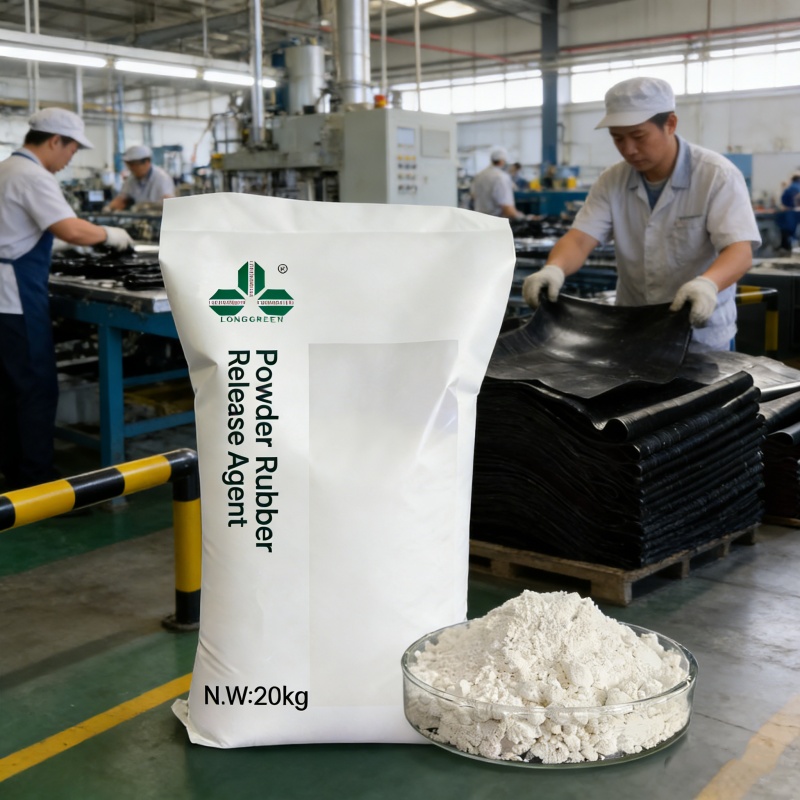
The physical form of a release agent is a key factor affecting workshop operation, environmental control, and occupational health management. LongGreen 1210, as a powder-type product, offers good suspension stability in aqueous dispersion, even at low dilution concentrations, with minimal short-term stratification or precipitation. However, powder-form release agents inherently carry the risk of dust generation during feeding, mixing, and on-site application, especially in dry workshop environments. This not only increases the need for additional dust removal equipment to maintain workshop cleanliness but also poses potential respiratory health risks to on-site operators. LongGreen 1230, as an innovative Pearl Particle Release Agent, addresses this core pain point with its unique pearl particle design. The granular form enables completely dust-free operation throughout the entire feeding and application process, significantly improving workshop air quality and reducing occupational health hazards for frontline workers. Additionally, the uniform pearl particle form allows for more precise dosage control, avoiding the material waste and inaccurate concentration adjustment common with powder products. This design is particularly suitable for automated production lines with automatic feeding systems, streamlining the production process and reducing manual intervention, making the Pearl Particle Release Agent an ideal fit for smart manufacturing upgrades in the rubber industry.
3. Application Efficiency and Usage Cost
The two products also show clear differences in application parameters, dispersion efficiency, and comprehensive usage cost. For LongGreen 1210, the preparation process requires stirring and dispersion in warm water for at least 30 minutes, with hot water only moderately accelerating the dispersion process. The recommended working concentration is 3.0% ± 1%, meaning a higher dosage is required to achieve the desired anti-adhesion effect. During continuous production, the liquid level of the dispersion in the impregnation tank must be maintained at more than 2/3 of the total volume to ensure full immersion of rubber sheets, increasing the total volume of the working solution needed for daily production. LongGreen 1230, the high-efficiency Pearl Particle Release Agent, offers superior dispersion and application economy. The product only needs to be dispersed in hot water at 80-90°C, then diluted to the recommended working concentration of 1.0% to 2.0% — nearly half the dosage of the powder-type alternative, directly reducing the unit consumption and material cost for manufacturers. The pearl particle formulation disperses evenly in water with no build-up on equipment surfaces, reducing the frequency of equipment cleaning and production downtime. Unlike powder products that may require frequent re-dosing to maintain dispersion stability, this product maintains consistent anti-adhesion performance throughout the entire production cycle. Moreover, the working concentration can be flexibly adjusted according to rubber type, formulation, and seasonal changes: higher concentrations can be used for high-viscosity rubber compounds in summer, while lower concentrations suffice for general processing scenarios, ensuring optimal anti-adhesion performance while minimizing material waste. This flexible dosing capability further amplifies the practical value of the Pearl Particle Release Agent for manufacturers with diverse product lines. Conclusion
Both LongGreen 1210 and LongGreen 1230 are reliable solutions for solving the adhesion problem of uncured rubber sheets in processing and storage, each with its own applicable scenarios. LongGreen 1210 is suitable for small-batch rubber manufacturers with low requirements for dust control and workshop environmental management, who prioritize a long shelf life and basic anti-adhesion performance. For modern rubber manufacturing enterprises pursuing higher production efficiency, better workshop environmental control, more stable product quality, and lower comprehensive operating costs, LongGreen 1230, as a high-performance Pearl Particle Release Agent, provides a more optimized solution. For facilities planning to upgrade their anti-adhesion process, the Pearl Particle Release Agent delivers clear and measurable advantages across all core production metrics. Its dust-free pearl particle design, filler-free high-compatibility formula, low unit consumption, and wide adaptability to automated production lines can help manufacturers optimize their rubber processing workflow, reduce occupational health risks, and ensure the consistent quality of final rubber products.