long green 7207-2 filler inside tire sprayer video
In the tire manufacturing industry, competition is tough—choosing the right auxiliary products directly impacts your production efficiency, tire quality, and profits. If you’re a manufacturer looking to streamline your production line while meeting environmental rules, LongGreen 7207-2 Tire Inside Paint is exactly what you need. It’s a high-quality water-based product that fixes the main troubles in tire production, from putting the bladder into the uncured tire to getting it out after curing. It works well and fits today’s focus on sustainability.
LongGreen 7207-2 is a high-performance water-based tire inside paint. It’s black-grey and has a medium-thick aqueous suspension formula. Unlike old solvent-based paints or regular silicone oil release agents, this product uses advanced, eco-friendly ingredients to boost your production efficiency, improve tire quality, and cut costs. Since it’s water-based, it doesn’t release harmful VOC emissions—protecting both your workers and the environment, and helping you meet global environmental regulations.
The main job of LongGreen 7207-2 is to solve two key problems in tire manufacturing: getting the bladder smoothly into the green tire and removing it easily after curing. These two steps are make-or-break—if they go wrong, you’ll face production delays, wasted materials, and defective tires, all of which hurt your bottom line. Luckily, LongGreen 7207-2 handles both tasks well, even when you’re producing large volumes of tires.
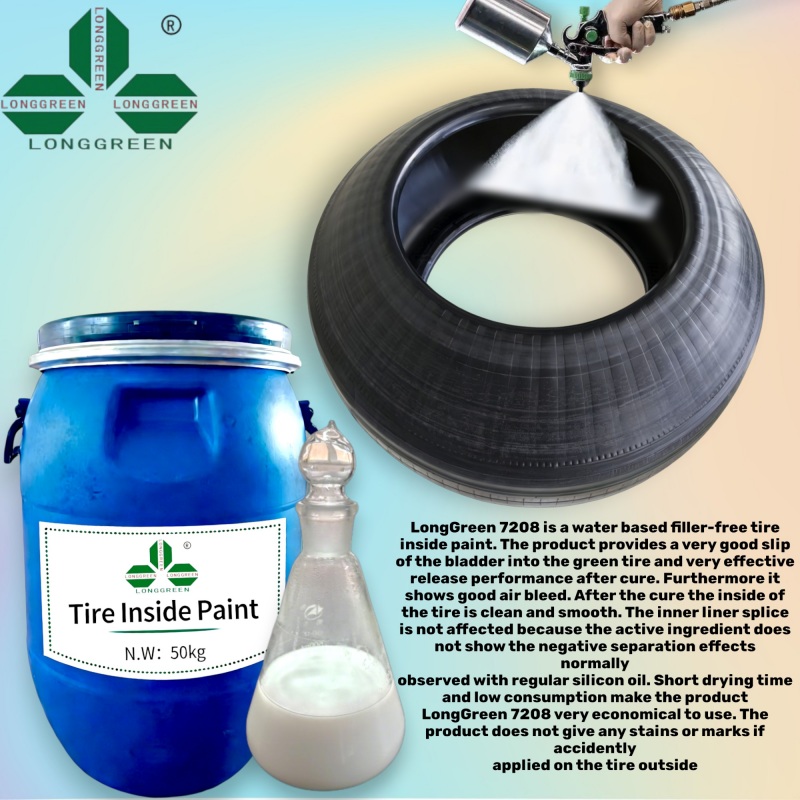
To use LongGreen 7207-2 effectively, spray it onto the inside of tire blanks with air atomizing spray systems. We suggest using a 1.0 – 1.2 mm nozzle to make sure the paint covers the surface evenly. Since it’s an aqueous suspension, it might settle a little over time—that’s normal for water-based products and doesn’t affect its performance. Just stir it gently before use, and give it a quick stir now and then during production, so the active ingredients stay mixed without slowing down your workflow.
One of its best features is how smoothly it lets the bladder slide into the tire. Its formula creates a low-friction surface inside the green tire, so the bladder glides right in without getting stuck, tearing, or misaligning. These issues usually cause delays and defective tires, so avoiding them saves you time and money. It also reduces wear on both the bladder and the green tire, which cuts down on long-term costs.
It’s just as good at releasing the bladder after curing. After the tire is heated and cured, LongGreen 7207-2 forms a thin, even film that acts as a reliable release agent. This means the bladder comes off the cured tire cleanly, without damaging the inner liner. Cheaper products often scratch or damage the inner liner, but this one leaves a smooth surface—so you don’t have to spend extra time reworking the tire, and it meets the strict quality standards the industry demands.
Another big advantage is its air bleed performance. When air gets trapped inside the green tire during curing, it causes defects like bulges or uneven tread, which make the tire unsafe. LongGreen 7207-2’s formula helps that trapped air escape, so the tire’s structure is even, there are fewer defects, and you get more good tires out of each batch. This directly boosts your profits by cutting down on waste.
It also protects the inner liner splice—a critical part that keeps the tire airtight and strong. Old silicone oil release agents often weaken this splice, leading to air leaks and expensive defects. Our advanced formula avoids this problem, keeping the splice strong and intact, so the tire stays airtight and durable for a long time.
LongGreen 7207-2 is also economical. It dries quickly, which reduces bottlenecks in production and lets you make more tires in less time. It also doesn’t take much product to cover each tire blank—way less than traditional alternatives—so you save money on materials. All in all, it’s a cost-effective choice that gives you a good return on your investment.
It’s versatile too—it works with all types of tires, including passenger cars, trucks, motorcycles, and specialty tires. It’s compatible with natural rubber, synthetic rubber, and all standard tire compounds, so you can use it on your existing production line without buying new equipment or making big changes.
Compared to solvent-based paints, it’s safer, dries faster, and is higher quality. It has no VOC emissions or residue. Unlike regular silicone oil agents, it’s better at letting air escape and protecting the inner liner splice—so you get fewer defects and stronger tires. It’s perfect for manufacturers who want to upgrade their production processes.