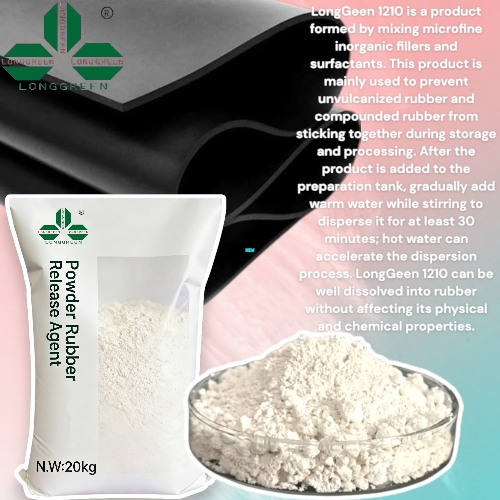
LongGreen 1210 is a rubber release agent made for rubber factories. It looks like grey-white or light-yellow powder, and it’s made with fine inorganic fillers and surfactants. The main thing it does is keep unvulcanized rubber and mixed rubber sheets from sticking together when you store or process them—every rubber factory deals with this problem. Unlike other release agents you might find, we’ve mixed this one carefully. It works well, but it also won’t ruin your rubber. It works for all kinds of rubber, too—natural rubber, synthetic rubber, and all the different mixed rubbers most factories use. The powder is really fine, so it mixes easily in water without clumping.
This product works good and is easy to use—saves you time and makes your work less of a hassle. Here’s how to use it: first, put the powder into a preparation tank. Then add warm water slowly (around 40-50℃ is best for mixing), and stir the mixture for at least 30 minutes. If you use hot water, it mixes even quicker—so you don’t have to wait around. When you mix this product with water, the mixture stays mixed well. Even if you dilute it a lot, it won’t separate or sink to the bottom right away. That’s a good thing because it means the inorganic fillers won’t sink to the bottom of the dip tank. If they did, they’d leave residue on the rubber sheets when you cool them down. When you dip the rubber sheets in the mixture, it forms a soft, stretchy film on the surface. This film keeps the rubber sheets from sticking, and it also keeps dust down—so your production area stays cleaner.
One of the best parts about LongGreen 1210 is that it doesn’t mess up your later production steps. When you mix and vulcanize the rubber later, this product dissolves right into the rubber. It won’t change how the rubber looks or works, so the final rubber products you make will be just as good as normal—no quality problems.
We suggest mixing it at a concentration of 3.0 ± 1%, but you can adjust that depending on how you’re using it to get the best results. For example, in summer, when it’s hot, rubber gets stickier. Or if you’re working with rubber that’s already thick and tends to stick, use a higher concentration (up to 4%) to make sure it works. In cooler seasons, or when the rubber is thinner, you can use a lower concentration (around 2%)—that uses less product but still keeps the rubber from sticking. If you have special rubber formulas or a tricky production setup, just ask our technical team. Our experts know a lot about rubber processing, and they can give you advice that’s right for your factory, so you get the most out of this product.
LongGreen 1210 is great for rubber refining. It helps you work faster, waste less material, and keep your production running smoothly. You can use it in a lot of rubber processing steps—like making rubber sheets, mixing rubber, storing it, and moving it around. It stops rubber sheets from sticking to each other and to your equipment. By using this product, you won’t have to spend time and energy prying stuck rubber sheets apart, and you’ll waste less material because of sticking. That makes your whole production process faster, and more of your products will be up to standard. Also, this product is non-toxic, has no bad smell, and is good for the environment. It meets international environmental and safety standards, so it’s safe for your workers and the planet. Choosing LongGreen 1210 means picking a release agent that’s reliable, works well, and doesn’t cost too much—helping your rubber factory run smoother and stay competitive.