

In the rubber and tire manufacturing industry, capsule protector and capsule curing agent are two commonly confused functional chemical additives for rubber tire vulcanization capsules, though they feature completely different working mechanisms, application stages and core functions with no interchangeability in actual production. Capsule curing agent is a key additive. Fundamentally, the capsule curing agent is a processing additive that acts on raw unvulcanized rubber materials in the capsule manufacturing stage.
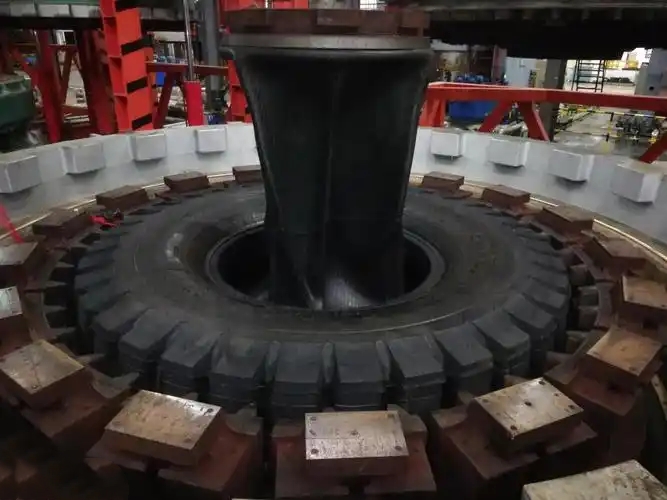
As a typical rubber cross-linking reagent, its primary function is to initiate and accelerate the vulcanization reaction of base rubber compounds. It breaks the original linear molecular structure of raw rubber, builds a stable three-dimensional network cross-linking structure among rubber molecular chains, and converts soft, viscous, easily deformable uncured rubber semi-finished products into high-strength, heat-resistant, elastic and dimensionally stable finished vulcanized rubber capsules. This chemical reaction is irreversible; without the addition of a capsule curing agent, raw rubber cannot complete molding and solidification, and the finished tire vulcanization capsule cannot meet the requirements of high temperature and cyclic pressure working conditions in tire workshops. In sharp contrast, the capsule protector is a special surface maintenance coating material exclusively for fully vulcanized and mature finished capsules, which plays no role in rubber cross-linking or chemical molding reactions at all.
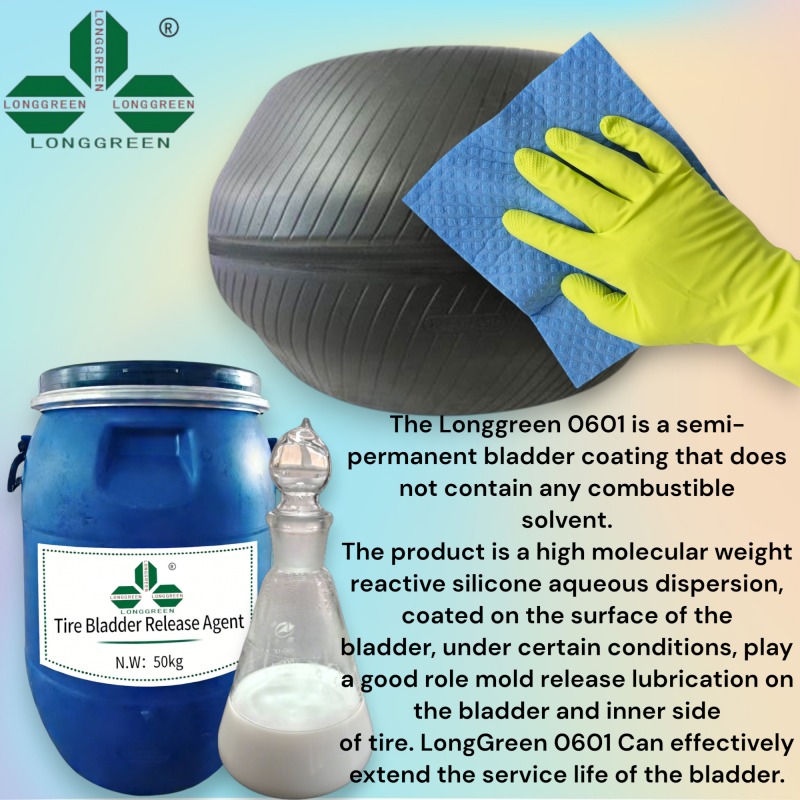
It is mainly composed of high-temperature resistant lubricating resin, anti-aging fillers and isolation auxiliaries, and is only applied to the outer surface of finished capsules during daily tire production operation. Its core value is to form a dense uniform protective film on the capsule rubber surface: this film can isolate the high-temperature tire rubber compound, prevent chemical adhesion between the capsule and green tire during tire vulcanization, reduce surface friction and mechanical wear during repeated expansion and contraction of the capsule, and inhibit rubber aging, surface cracking and oxidative degradation caused by long-term exposure to high temperature, oxygen and rubber chemical precipitates.
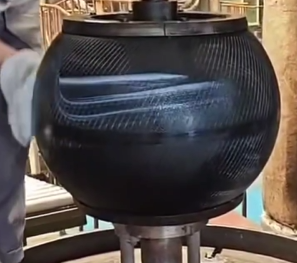
Beyond core functions and application timing, the two reagents also differ greatly in chemical properties and production risks. The capsule curing agent is chemically active, thermosensitive and prone to triggering spontaneous cross-linking reactions once encountering excessive heat, requiring strict low-temperature sealed storage and precise proportioning according to rubber formula standards. The capsule protector, by contrast, is chemically inert under normal working and vulcanization temperatures; it will not participate in any rubber chemical reaction or change the inherent physical properties of molded capsules, and it only provides physical isolation and surface anti-aging protection. To sum up, the most intuitive distinction lies in their positioning in the whole production chain: the capsule curing agent is a production raw material for making capsules that shapes the basic performance of rubber capsules, while the capsule protector is a consumable maintenance chemical for using capsules that extends the service life of ready-made capsules and optimizes on-site tire vulcanization operating effects. Capsule curing agent is indispensable.

