
First, let's talk about the use of powdered isolation agent before. When feeding, the workshop was covered in white dust, making workers feel uncomfortable while working. The equipment, ground, and conveyor belts were all covered in powder, and every two days they had to stop work for a thorough cleaning. When the powder encounters moisture, it clumps together and cannot dissolve when soaked in a sink. The surface of the film accumulates hard lumps, and the subsequent vulcanization and bonding are all affected. The finished product is prone to spots and bubbles. Moreover, there is a lot of dust, and environmental inspections are often called upon, resulting in high manual cleaning costs over the long term.
I have also tried using a simple saponification solution for isolation, but the isolation effect was poor. The films stuck to each other after being stacked for a short time, and the semi-finished products were directly torn apart by tearing, resulting in significant loss. When the film passes through the rollers, there is high resistance, making it difficult for workers to operate. The entire production line is not smooth, and piles of defective products are picked out, which affects the output.
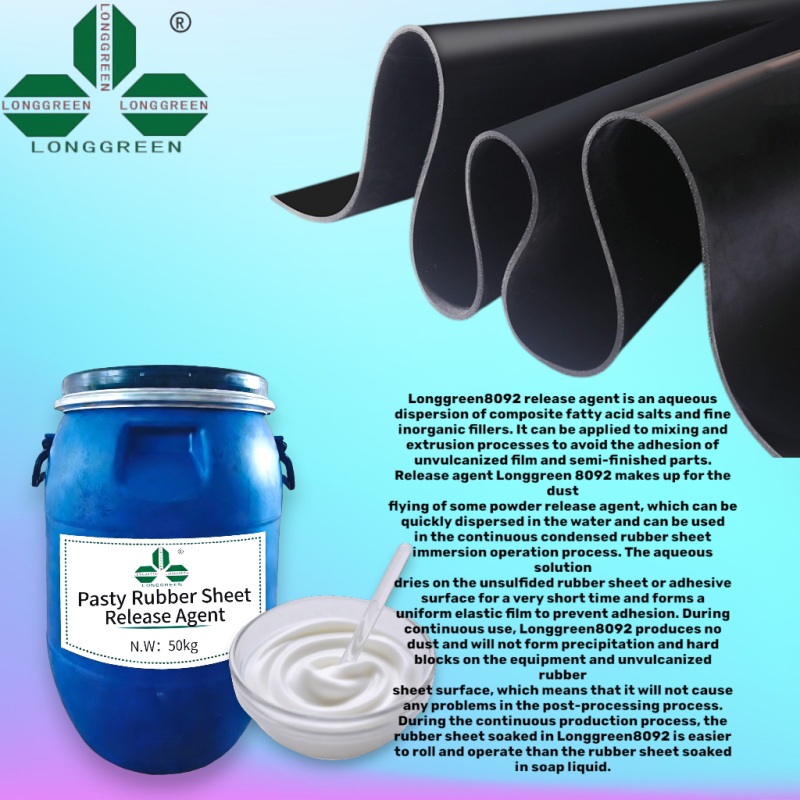
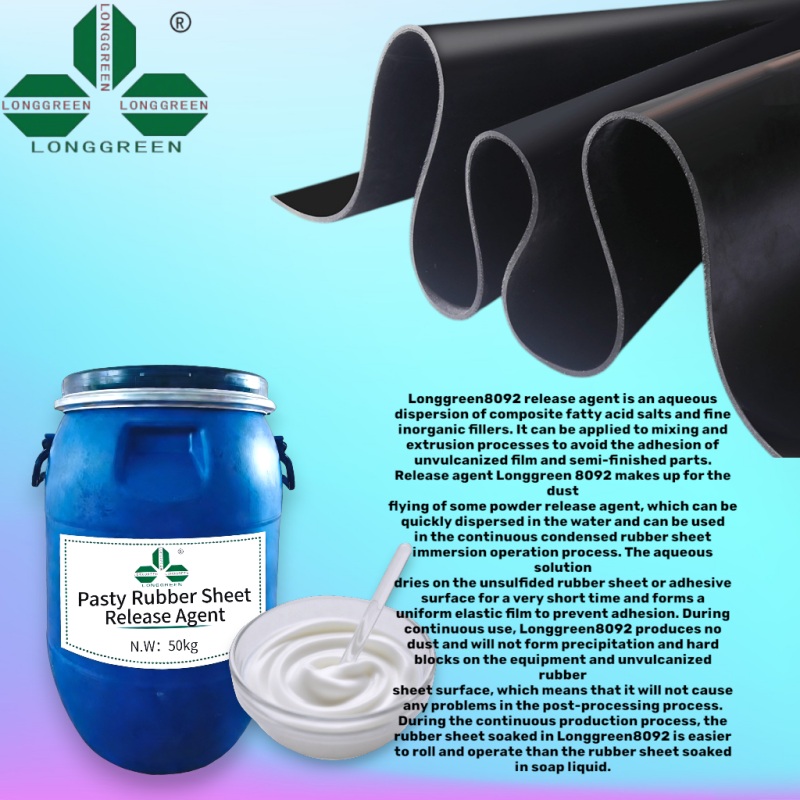
This 8092 is a water-based paste material made of composite fatty acid salts and fine inorganic fillers, which has no dust problem and perfectly avoids the old problem of powder dust. Pouring it into a cold water tank can quickly disperse, especially suitable for production lines that continuously immerse film after extrusion.
After immersion in the solution, the surface of the film dries quickly, forming a uniform and elastic thin film with stable anti sticking effect. During continuous production, there will be no sedimentation or clumping in the sink, and there will be no accumulation of hard impurities on the surface of the film. There will be no problems in any subsequent processing steps. Compared to soap solution, the roller is easier to operate, the feeding is smooth, and workers can easily handle it.
Easy to use, first shake or stir the bucket, then dilute with water in a ratio of 1:10 to 1:20. The effective ingredient of the original solution is 24% -30%, and the concentration of the original solution in the tank is controlled between 4.8% and 10%. It can be adjusted according to the working conditions of our own rubber material. If you are unsure about the parameters, you can directly contact our technical team.
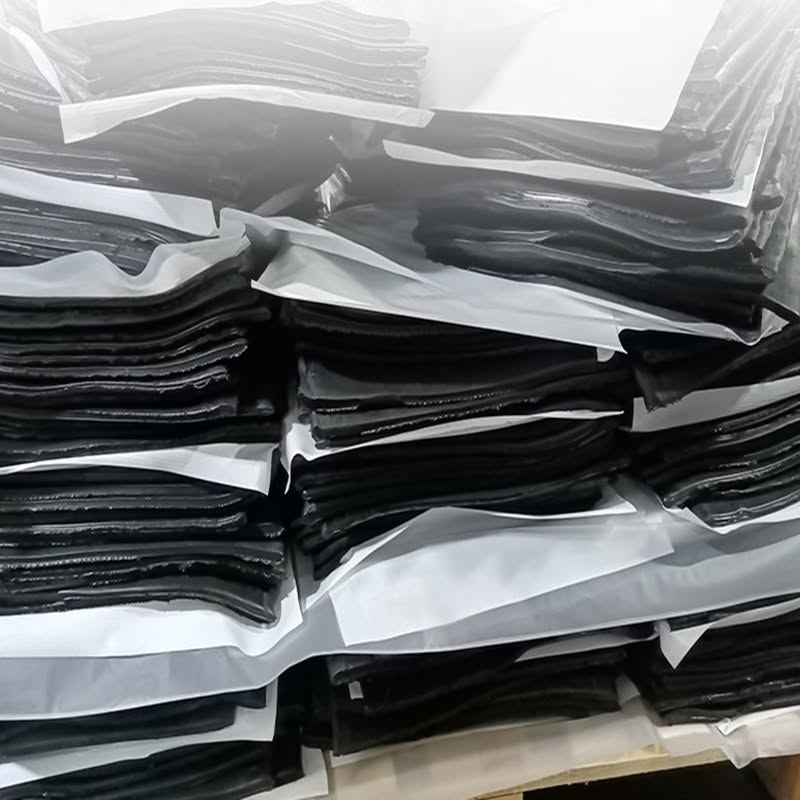
There is another way to save money, it can be mixed with our powdered isolation agent to achieve better isolation effect and lower the cost of raw material procurement. After soaking the film, it must be fully dried before stacking and storing to avoid water accumulation and adhesion.
The product specifications are stable, and the appearance is a light white to light yellow viscous paste. The density is about 1.07g/cm ³ at 20 ℃, and the pH value after dilution is 8.0-11. It is suitable for the vast majority of uncured films, rubber semi-finished products, tire factories, and seal processing factories.
There are many packaging specifications to choose from, including 25kg and 50kg small drums, as well as 400kg, 500kg, and 600kg large ton drums. They are suitable for small batch samples and large batch production stocking. As long as the storage is tightly sealed, avoiding frost, high temperature, and direct sunlight, the performance is stable when stored at room temperature for a whole year. The production date is marked on each barrel, making warehouse inventory very convenient.
Colleagues who produce semi-finished rubber products and tire mixing and extrusion can try this 8092. It has no dust pollution, no clumping in the immersion tank, and the film does not stick to the material. The post-processing is not affected, and it can also be combined with powder to reduce consumables costs. The production line has less rework and low film loss, saving a lot of hidden costs in long-term use.